
Project finished on the 14/12/2020. But the project had already begun before the brief was given to us. After the map group project I decided that from now on I would work with people which were extremely passionate, ambitious, brave and with high criteria for their work. I saw an opportunity to do that when I met Liza and later Ellis, with which I also share artistic interests and sensibilities; we are different in our own ways but we complement each other very well.
So when the brief was given to do a photographic project I didn’t think twice. We were told to research an artist which we didn’t know of previously and add the influence and motifs of that artist in the photograph, apart from basing that photograph in another piece of visual art unrelated to our chosen creative. My chosen creative was Bridget riley.
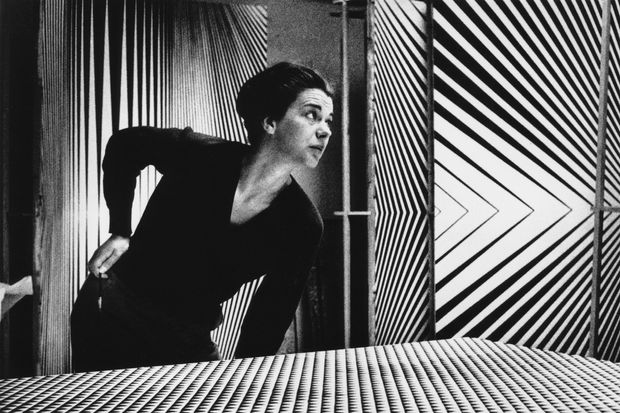
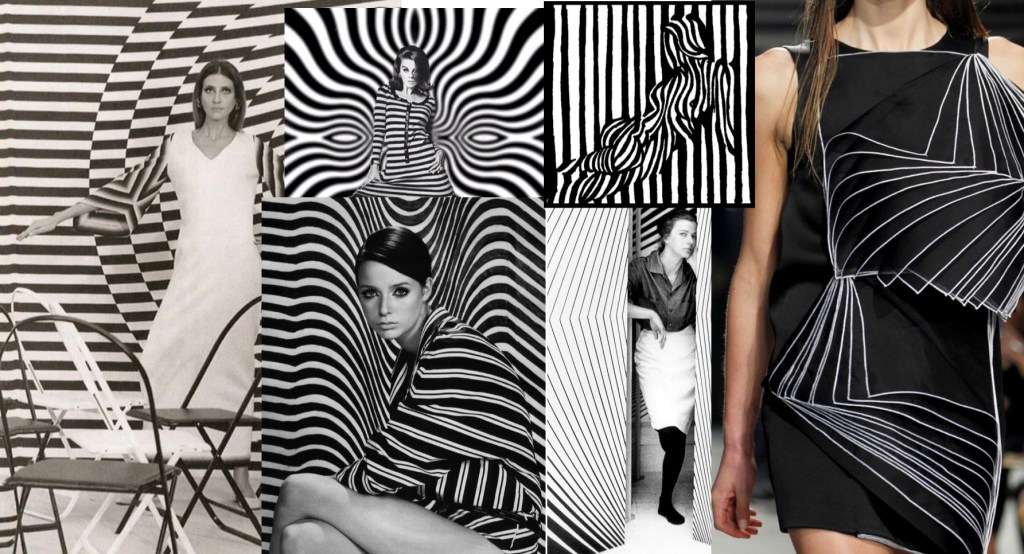
Bridget Riley is a Scottish painter born in 1939 and deeply influenced by the works of the post-impressionists and Matisse. Most of her work is very line-based and geometric, with dazzling patterns and illusions. In the 60s she started developing her main body of work labelled as “Op-art”, or art with optical illusions, which at first were monochromatic and later a bit more colorful. She uses very technical and mathematical graphic design and visual theory to produce artistic works (something that is not very common) and usually her approach to a rt is very light-hearted and playful. She produces art to this day.
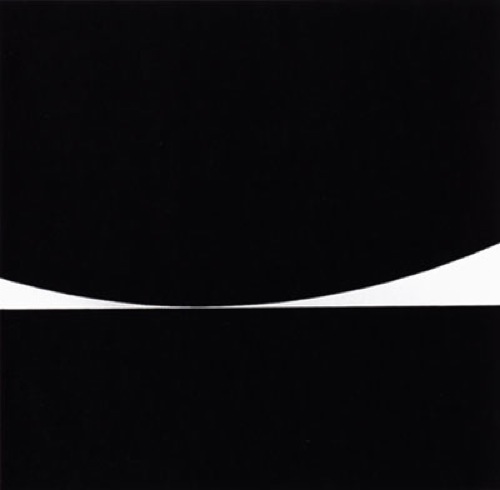
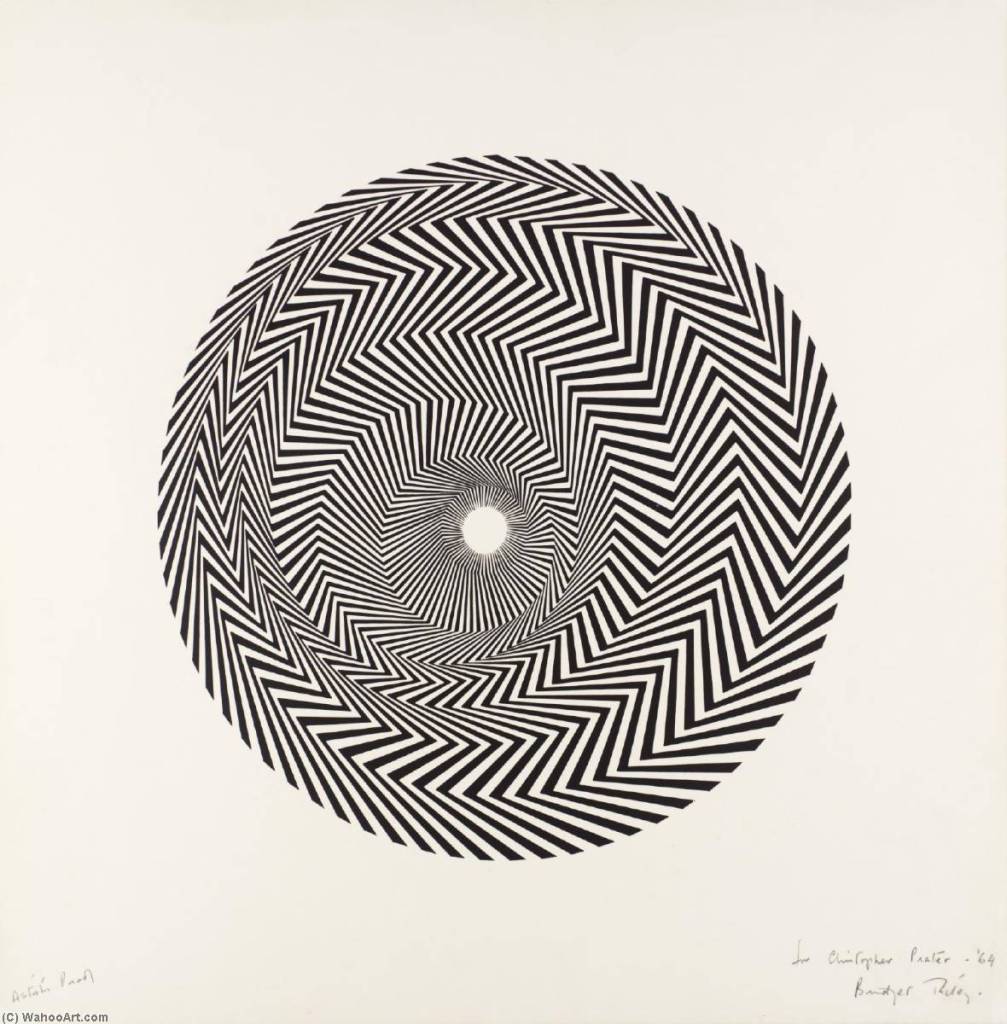
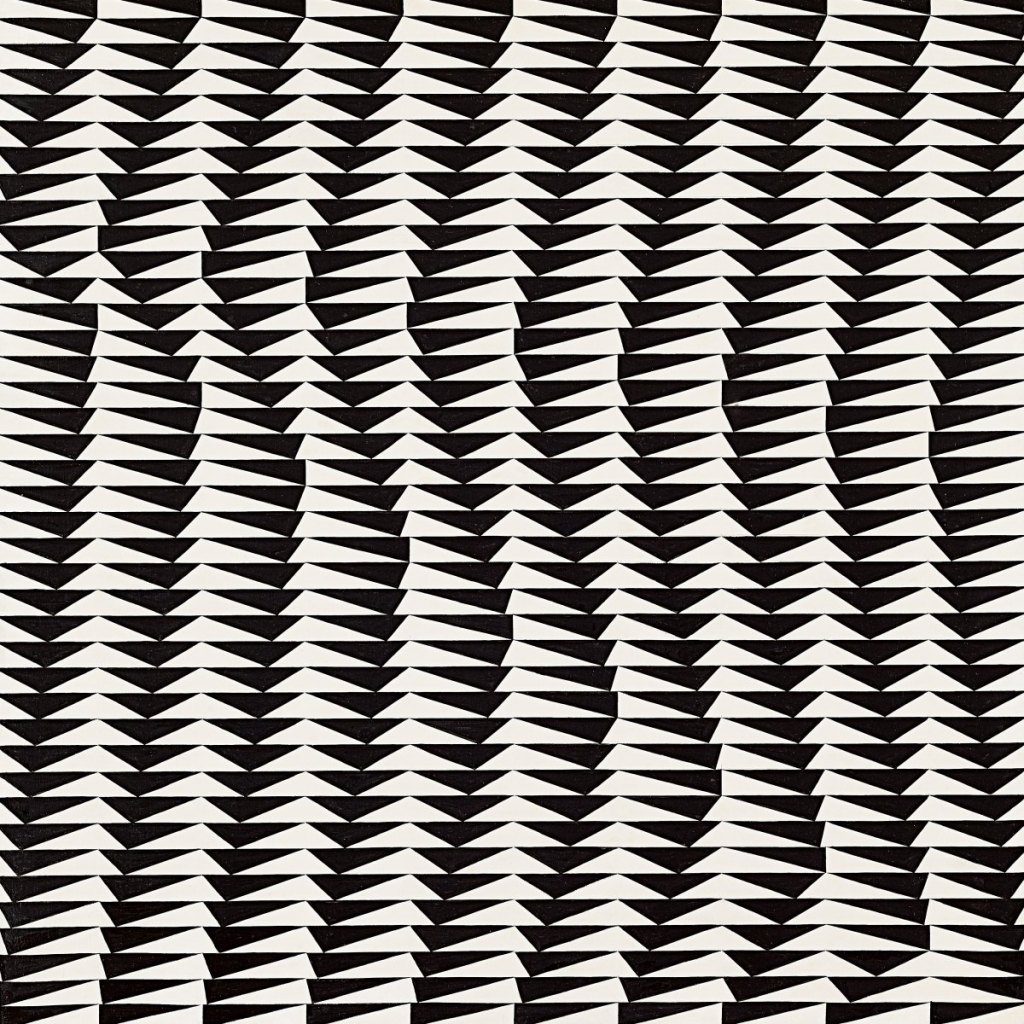
I saw the power of her work, especially the 60s stuff, very useful for fotography, for example, as a backdrop. Bridget was very influencial for high fashion in the 60s. Below is shown a fashion moodboard I created about Bridget riley.
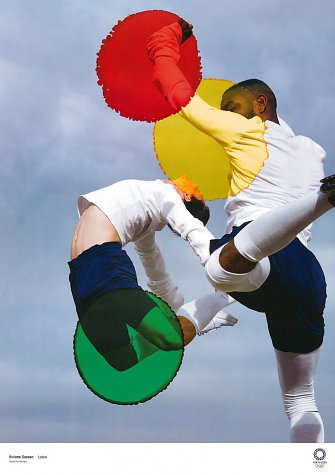
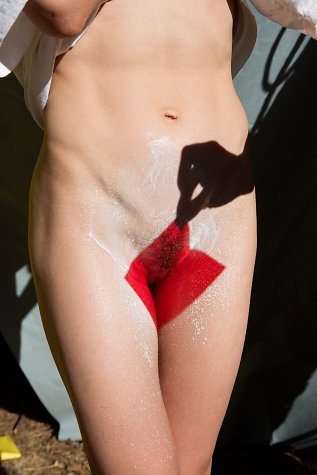
Liza’s artist was Vivianne Sassen, a South african photographer that uses vibrant colors and body shapes to create very striking images (check out her blog for a more in-depth look).
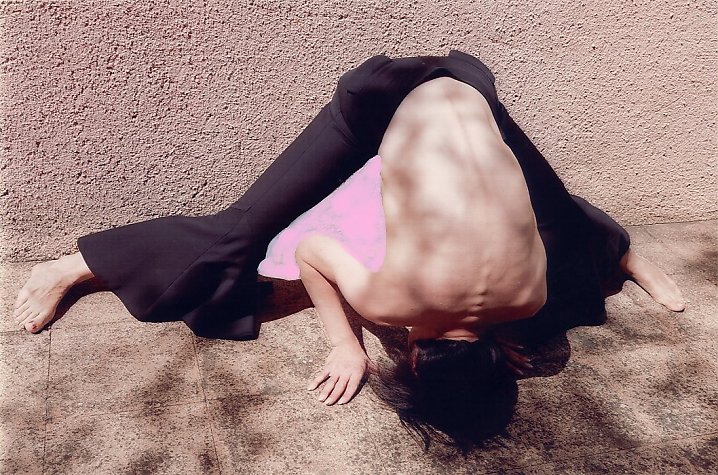
The artist chosen by Ellis was Yvonne Rainer, an American Coreographer and dancer which was extremely innovative by her concepts, stage directions and interactions between dancers. (check out his blog for a more in-depth look).
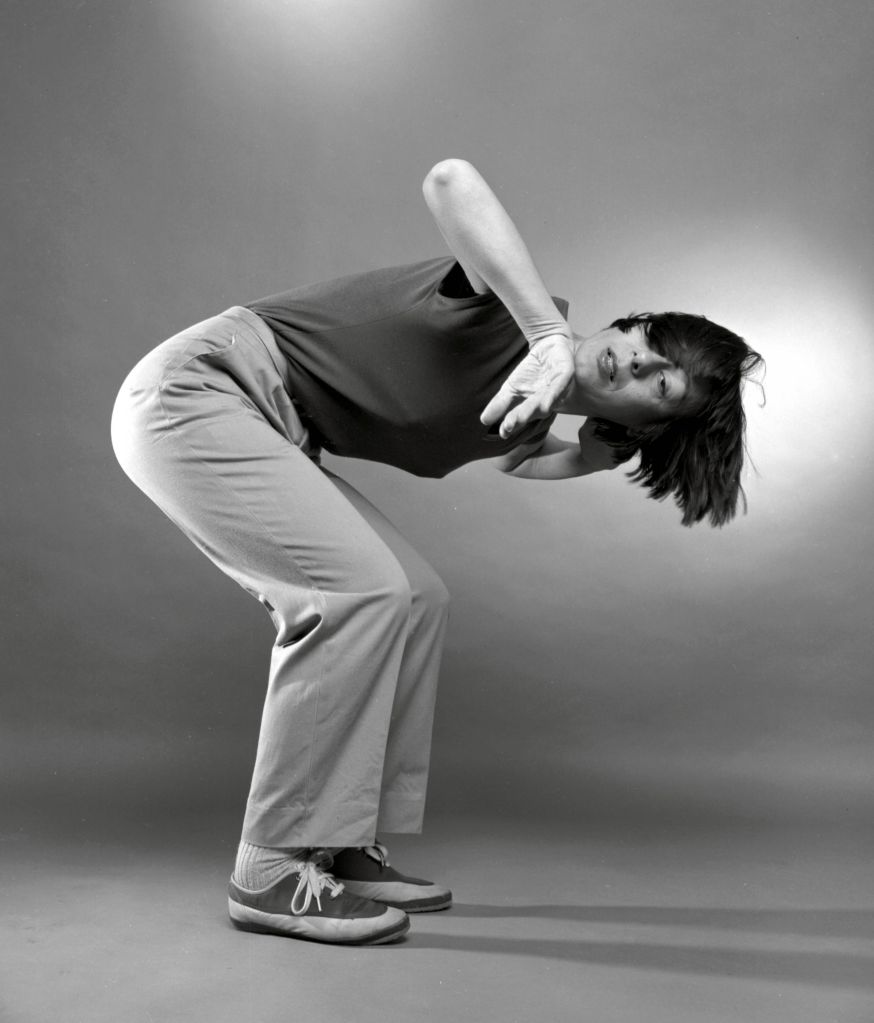
We saw the possibility of mixing and melding the styles of these three artists, the patterns and dazzles of Bridget Riley, the colors of Vivianne Sassen and the body shapes and dynamism of Yvonne Rainer. It was very challenging to see how everything would end up going together but the three of us were very passionate in doing so and we found common ground.
On one of the first days I played a bit with Bridget’s linework to have some fun, I got one of Yvonne’s body poses and used Kandinsky’s theory of lines and tension to identify the main lines that the mody made and thus branch out from them Bridget’s patterns. These were the results
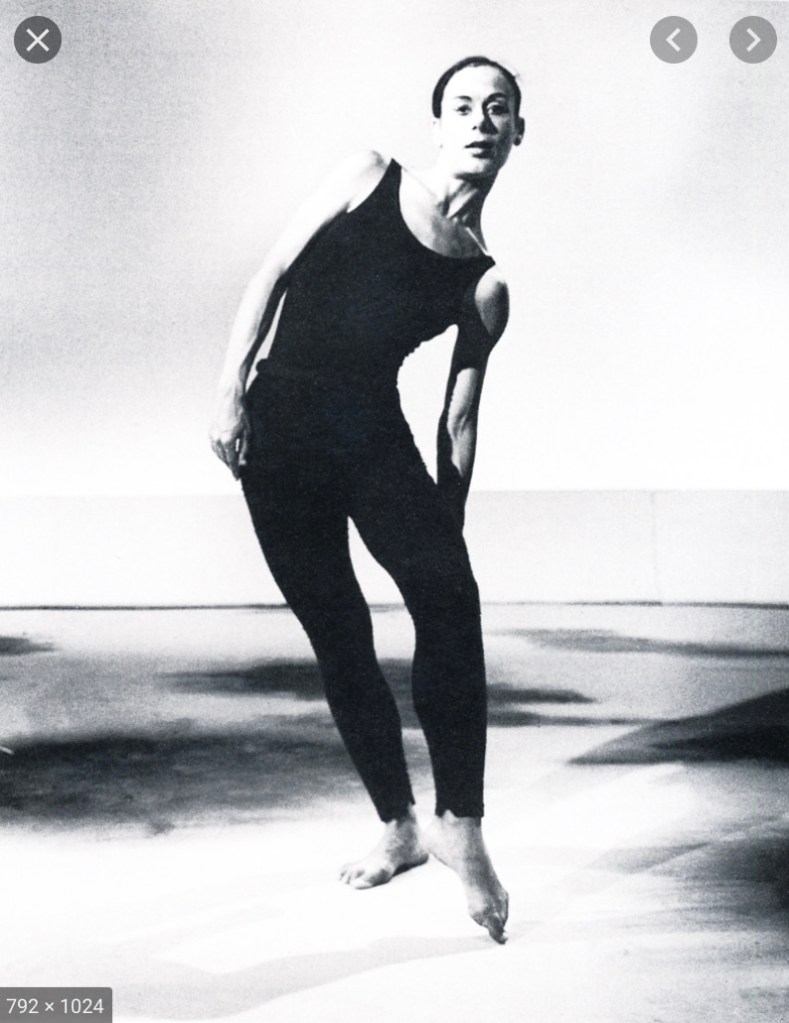
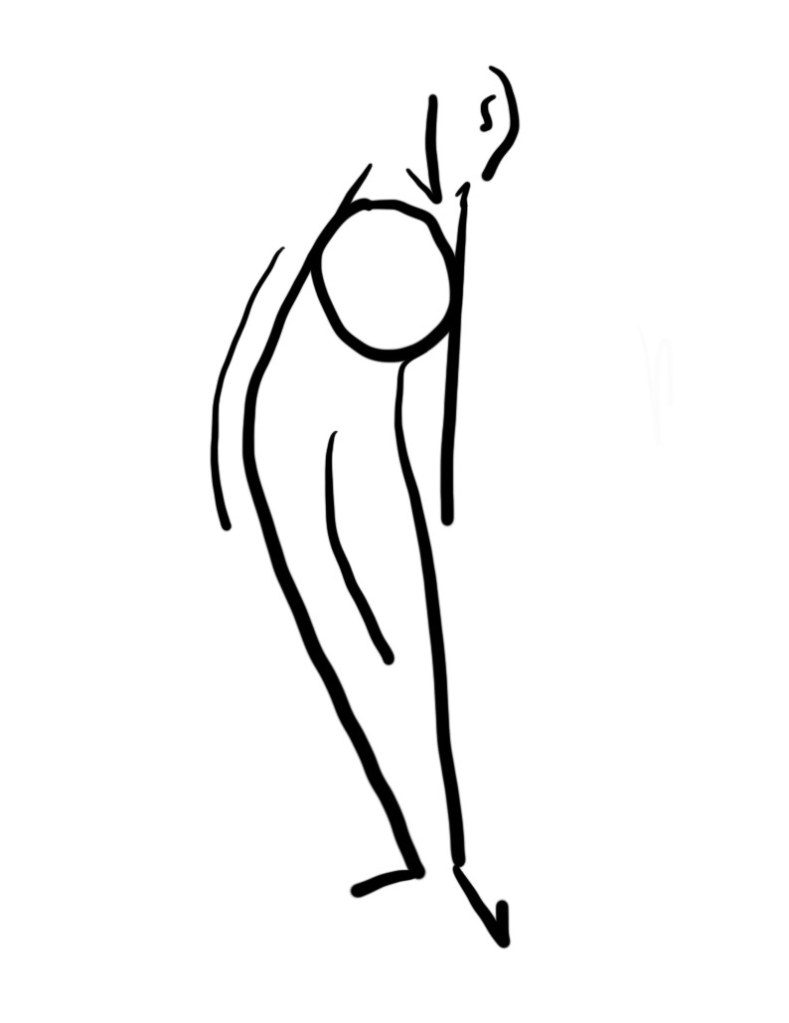
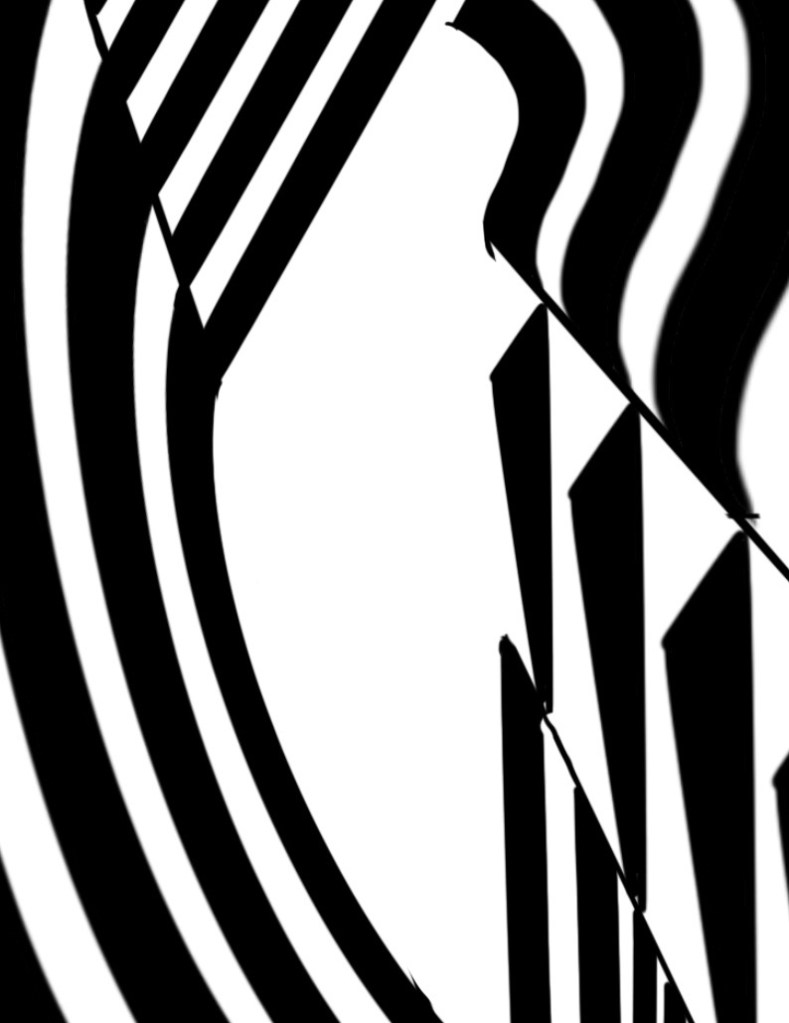
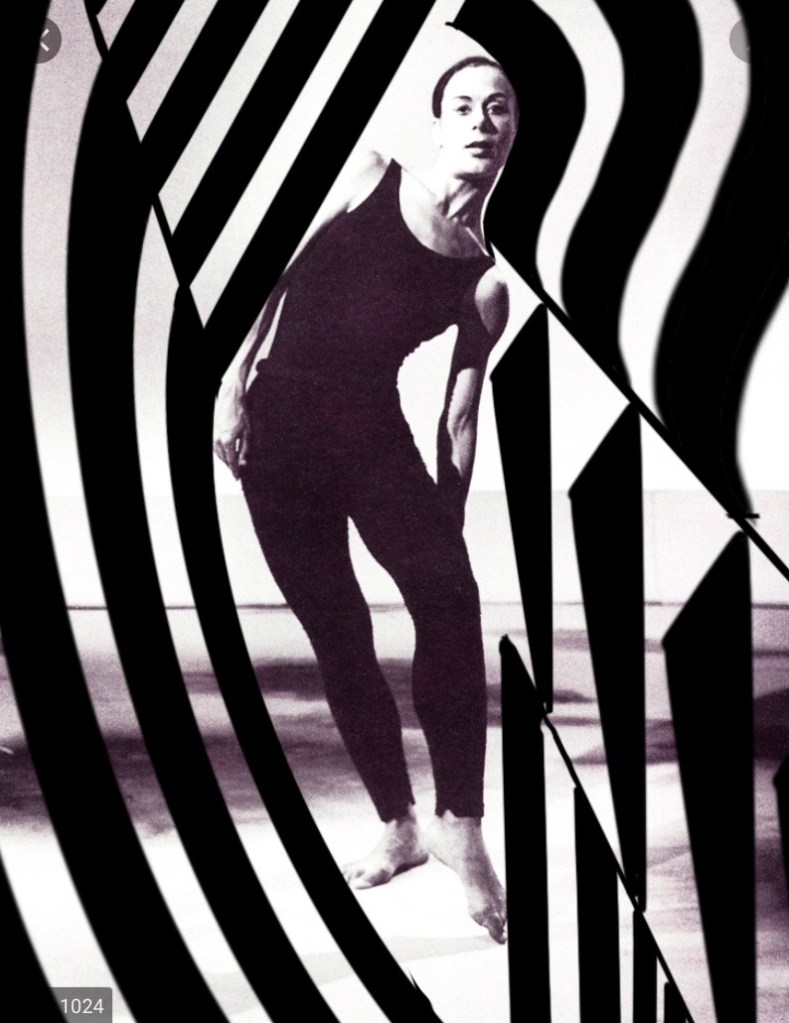
So I found it interesting how it worked and the image made sense but it just wasn’t what we were looking for. However I see myself returning to this idea at some point in the future.
Another day in class we were given the opportunity to shoot a couple of pictures and there Liza and I tested some of the ideas we had (apart from having a lot of fun). We used the projector to take some pictures with Bridget’s art as a background, we also used it to project some of our own pictures. These are some of the results.
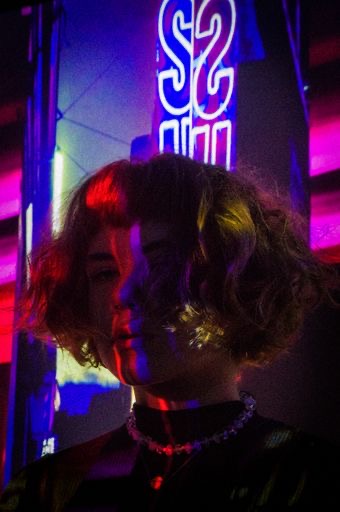
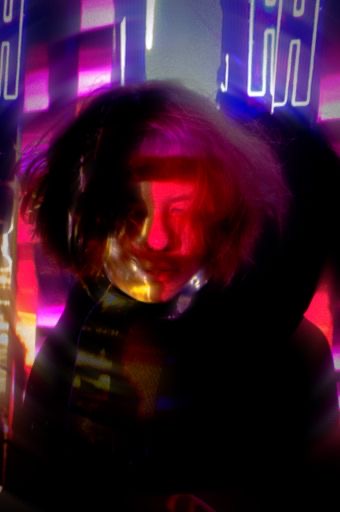
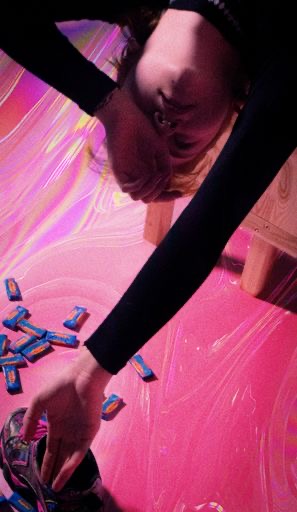
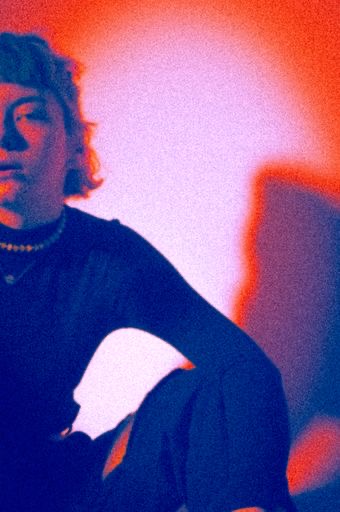
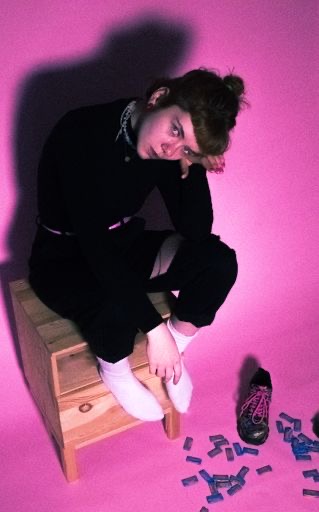
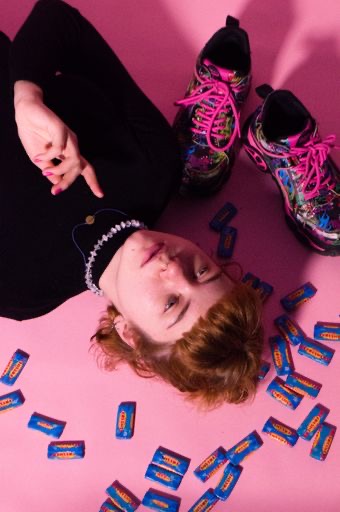
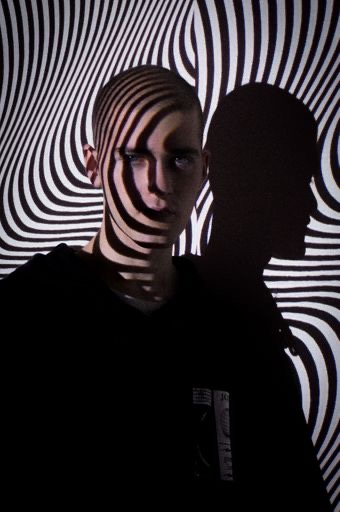
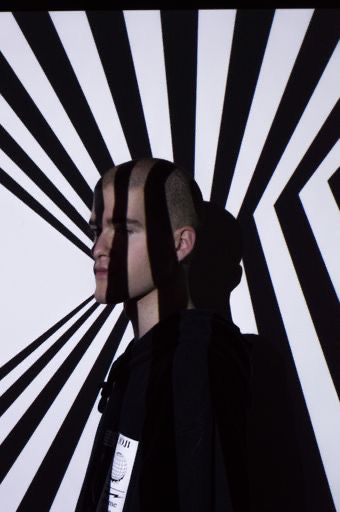
Also since the brief asks us to produce one picture each, I came up with the idea of creating a Tryptich: three images that work as one, where each picture makes sense in itself but reinforce one another; creating a very strong and impactful final outcome.
Other task was to find a pictoric reference to base our work in. I did an in-depth reaserch in tryctichs along history and found many interesting things. I started researching medieval tryptichs, being the first thing that came to mind, but I quickly saw that they were not what I was looking for. They might have been at some point sinse our initial idea was to use many subjects with mirrors to create a very strong sense of space and perspective (but sadly the covid regulations didn’t allow us to do so). Medieval Tryptichs usually have a main central picture (usually in medium format) and other two, less important, images on the side that reinforce the central one. Problem is: they usually have many subjects in it with complex scenes and the backgrounds are usually landscape-based. These are some examples:
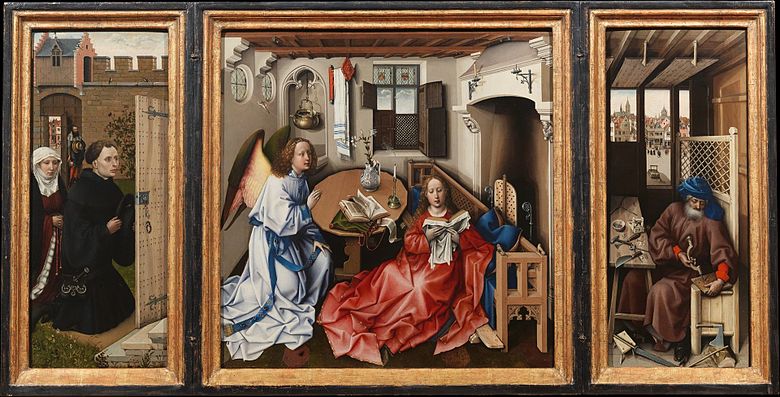
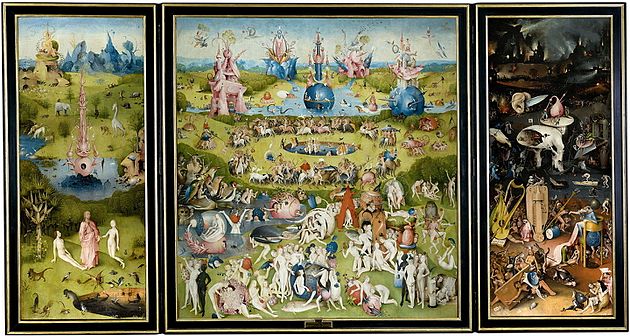
From up to down: Merode Altarpiece – Robert Campin (1427-32); The Garden of Earthly Delights – Hyeronymus Bosch (1490-1510).
The second thing that came to mind when I thought of a tryptich was Francis Bacon’s work, and that’s where we found exactly what we wanted. He has a very large body of work where he made 28 tryptichs that we know of, he creates a very strong sense of space in his tryptichs and of continuity; with usually a single human-like figure in each frame. His compositions are very dynamic and strong. These are some examples:
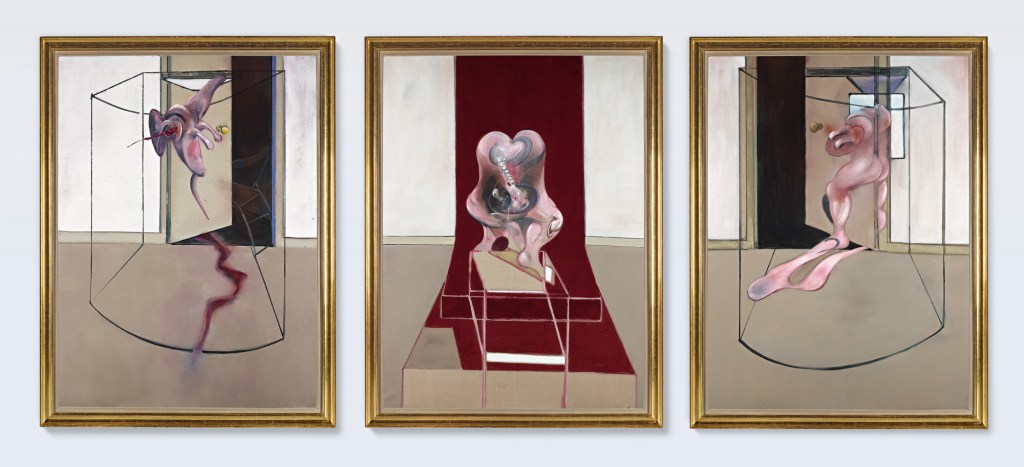
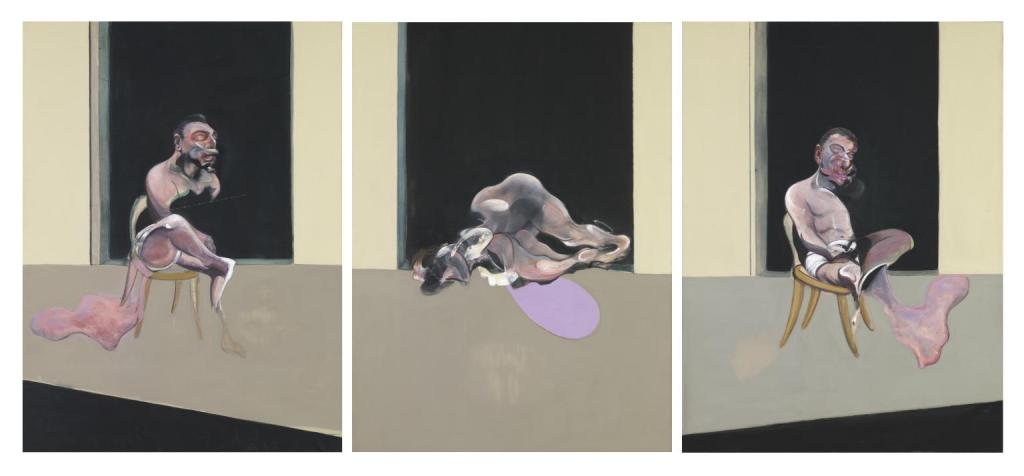
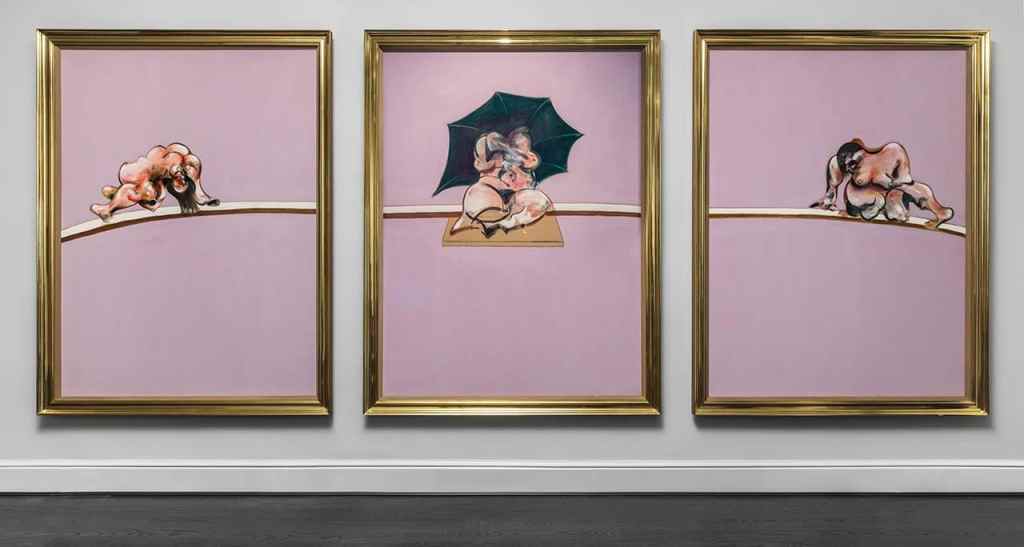
From up to down: Triptych Inspired by the Oresteia of Aeschylus (1981), Tryptich august 1972, Tryptich 1970.
We decided to end up going with the Variation of Tryptych 1944 (1988) -shown below-, where we saw the individual figure, a sense of space and a composition that we coud feasibly create in the photographic studio.
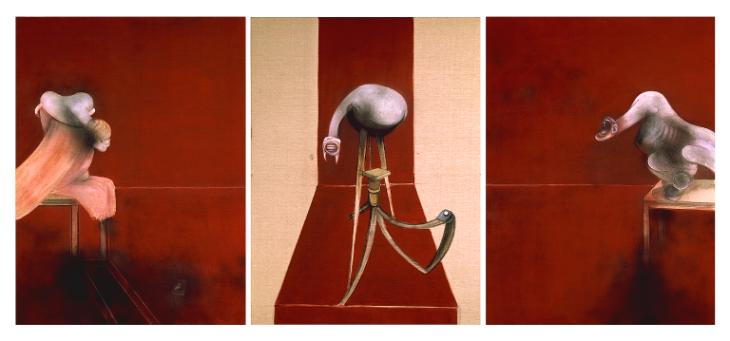
We decided that I was going to create a Bridget Riley inspired backdrop in monochrome, Ellis was going to come out with body poses for the model (inspired on Yvonne’s work) and Liza was going to figure out the lighting and use of colors (taking inspiration from Vivianne).
I was inspired by Bridget’s work “Continuum”, an installation she created where the patterns specially spoke to me.
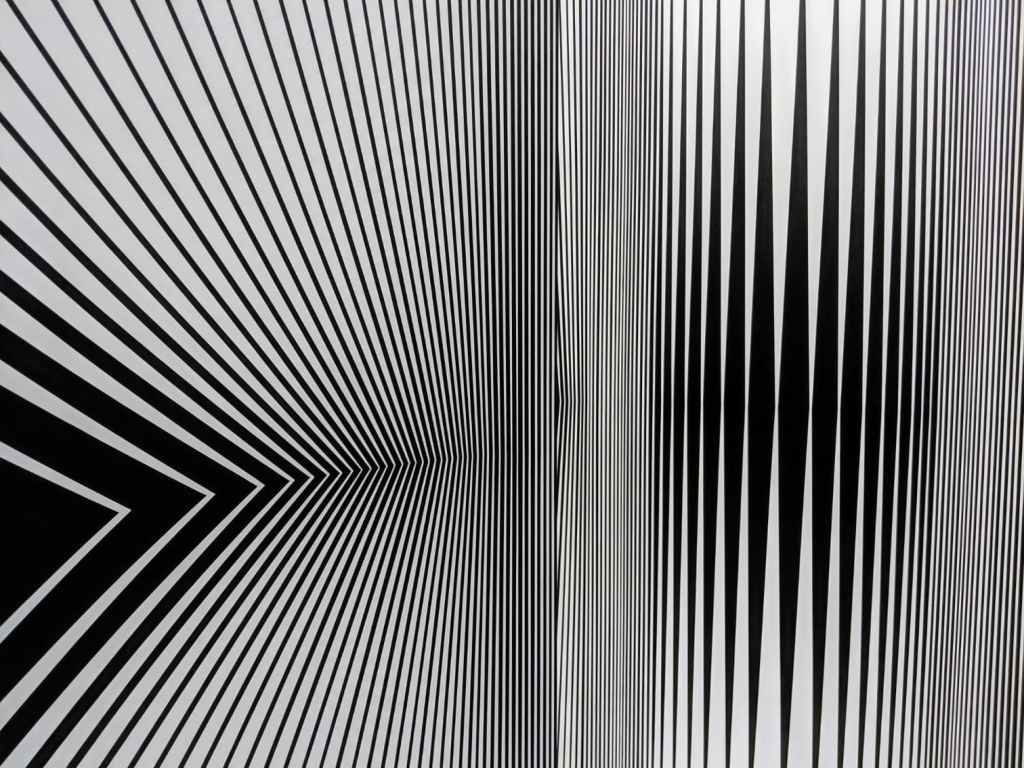
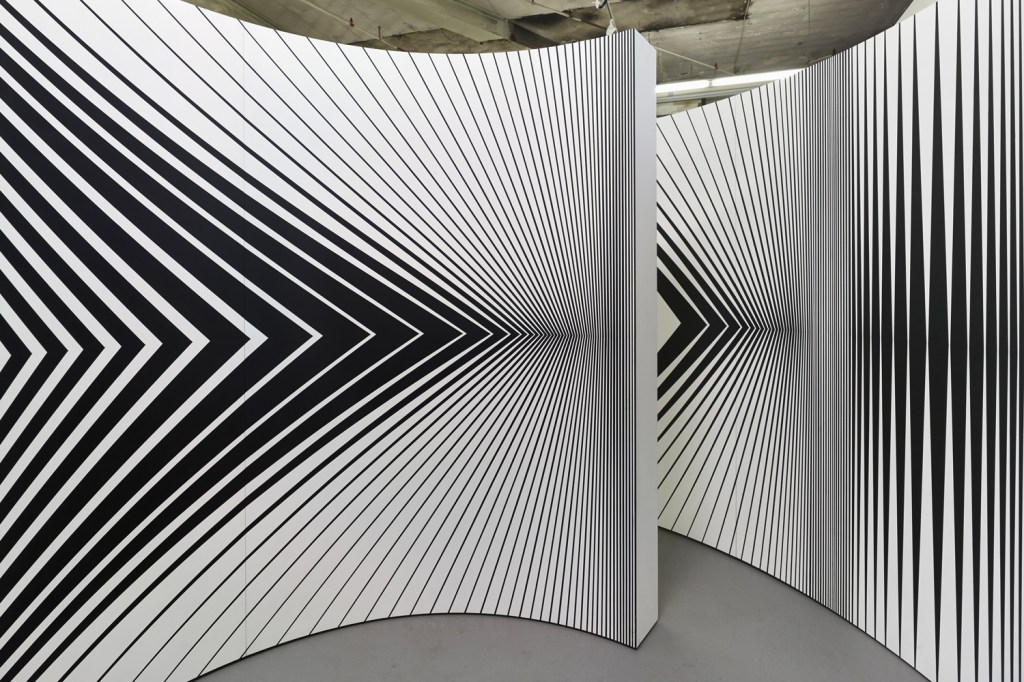
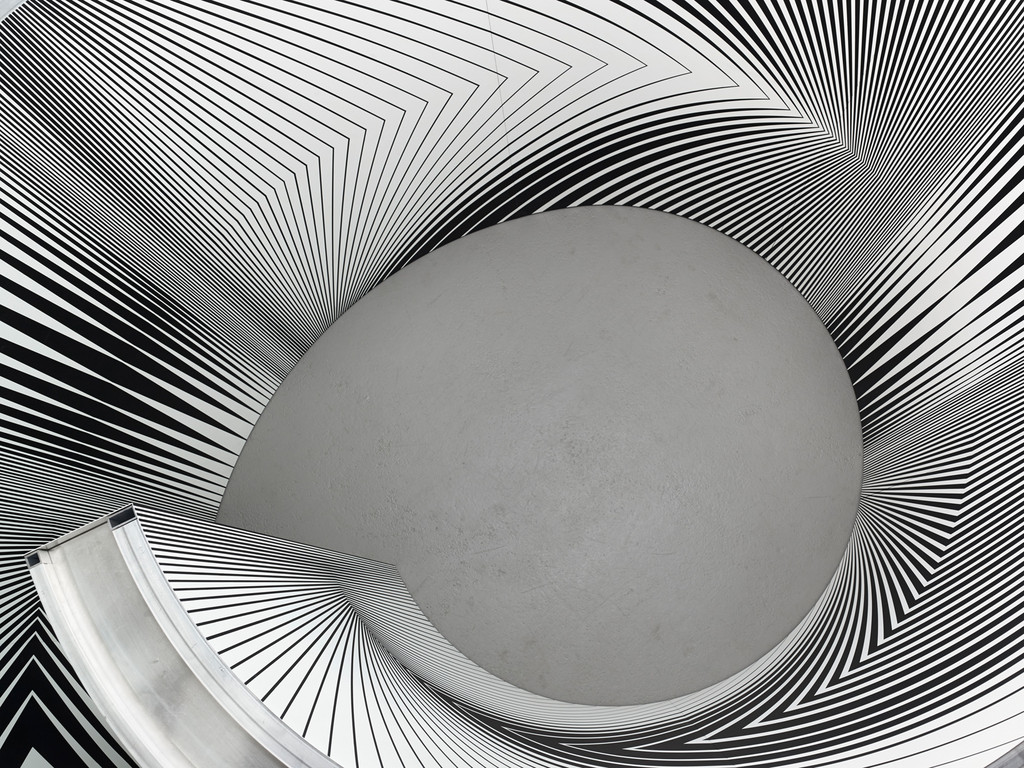
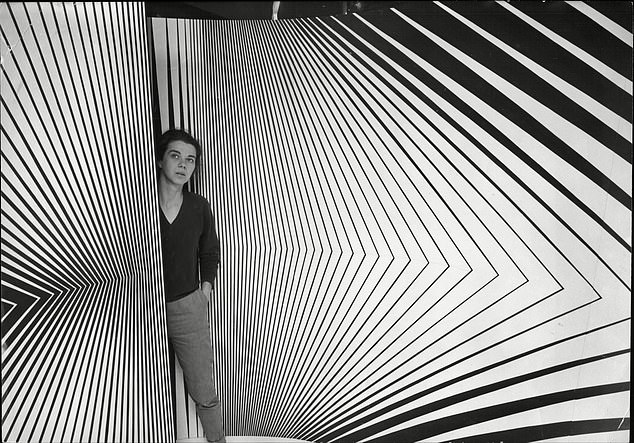
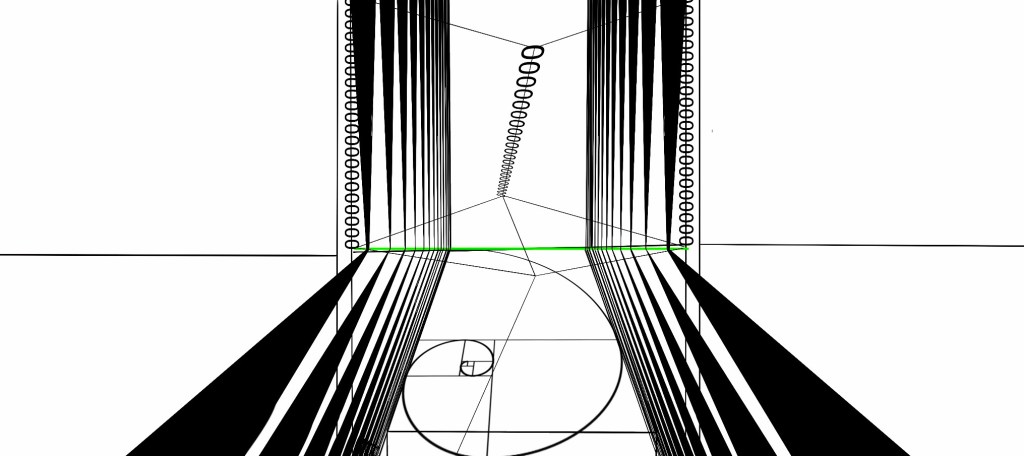

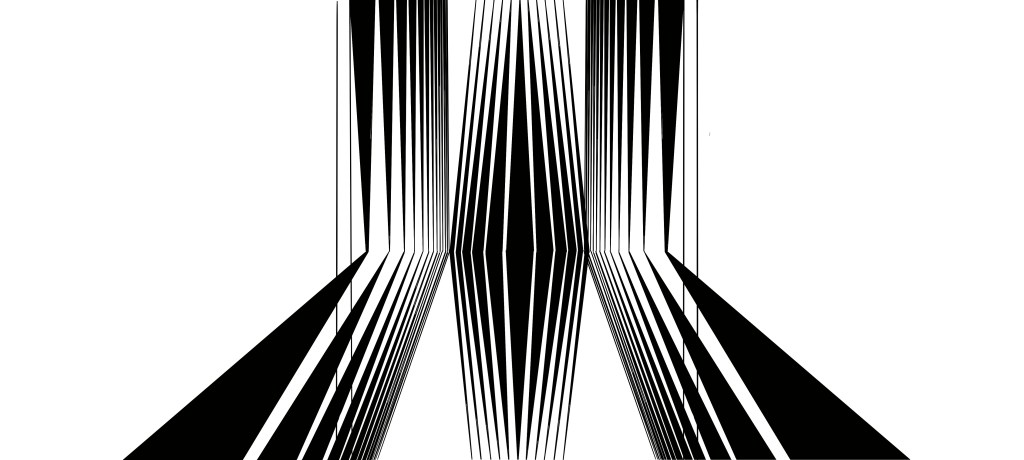
First four images: Continuum shots. Last three: process and final backdrop.
At first we thought to add the lines of the background with paint (and use body paint in the model) but after the mock photoshoot we thought that using a projector could be the best option, so this backdrop was intended to be projected on the model during the photoshoot and using the dividing lines in the last image as reference.
Ellis booked a slot in the photographic studio at Knight’s park (for 2 hours) and also booked a projector and some lighting. We wanted to find as a model someone that was comfortable with strange body poses and which was also expressive with movement, so we chose our friend Lola Davis, who also has a background in drama.
We arrived at the studio the — and took the raw images, we also took some with other possible backgrounds in case the one I created wasn’t ideal. These are the results.
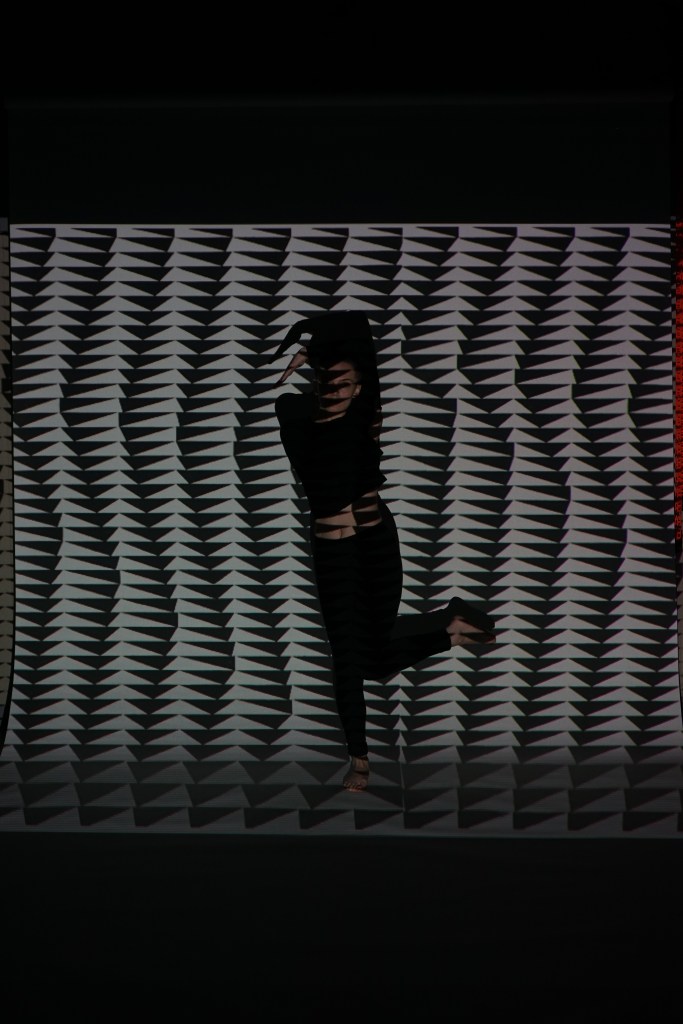
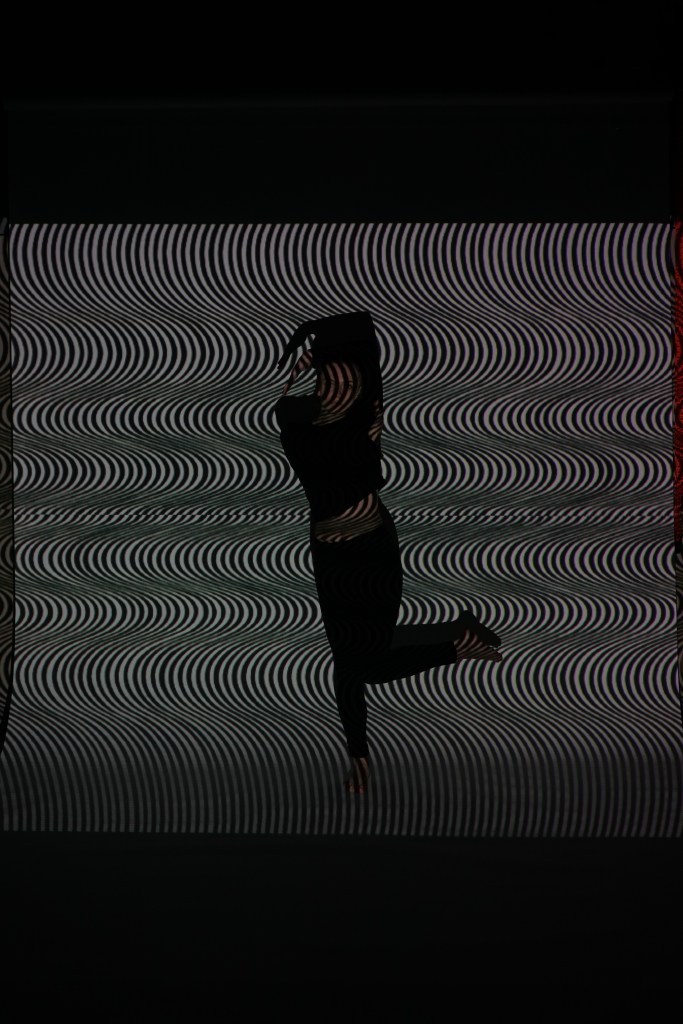
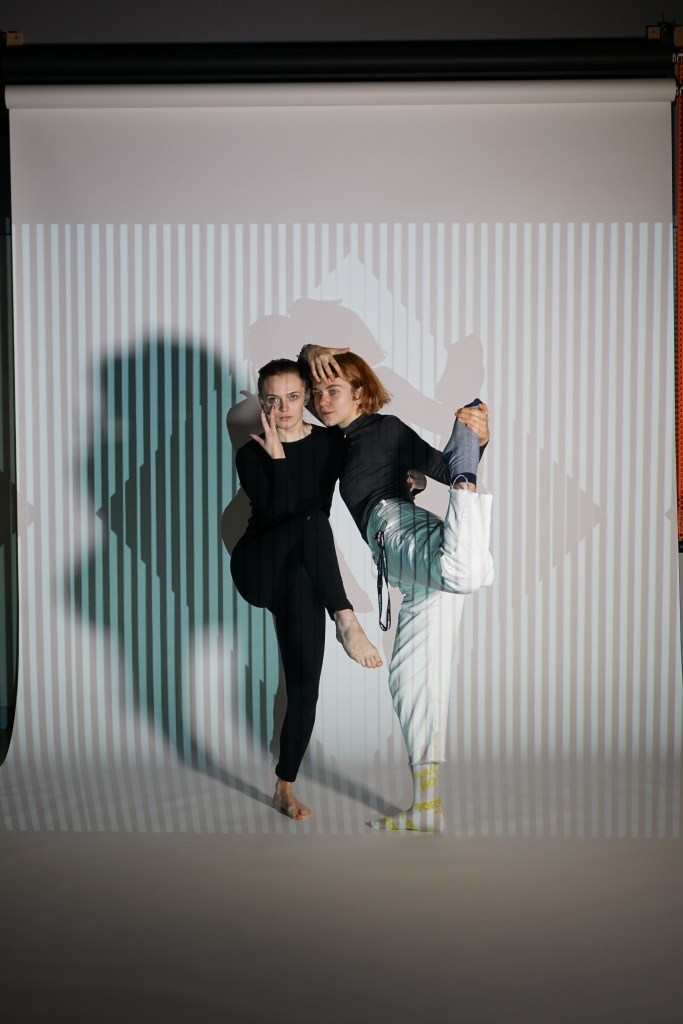
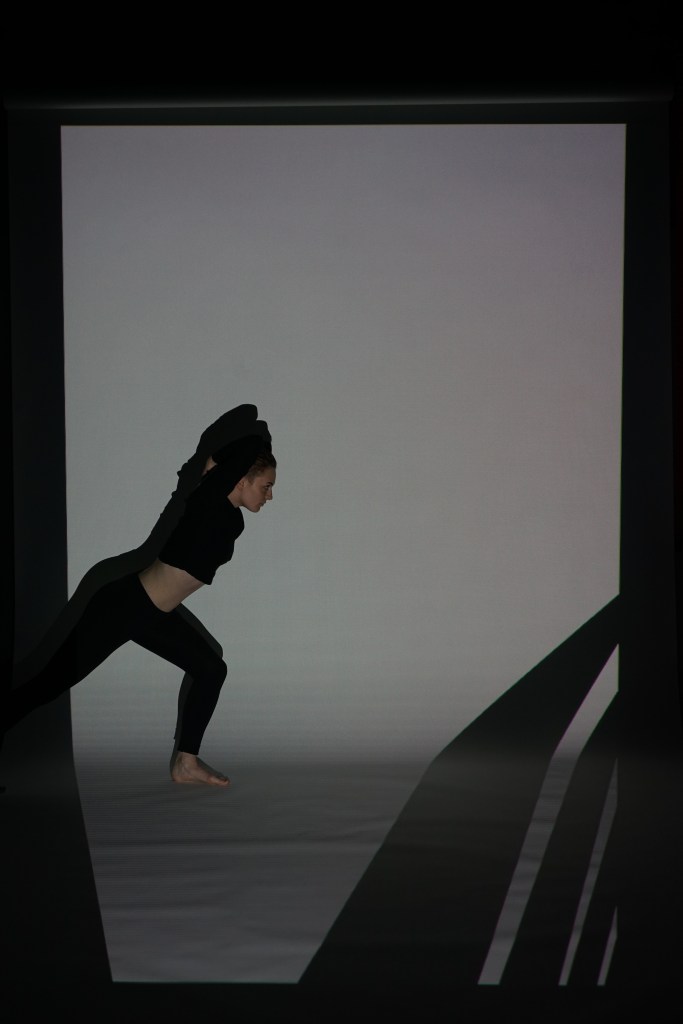
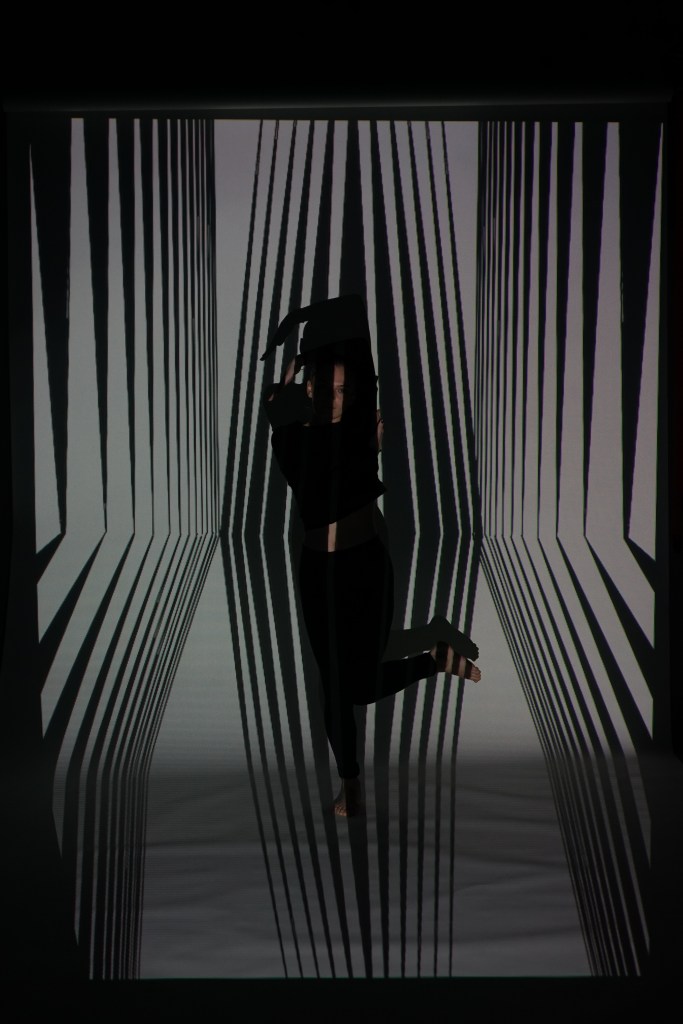
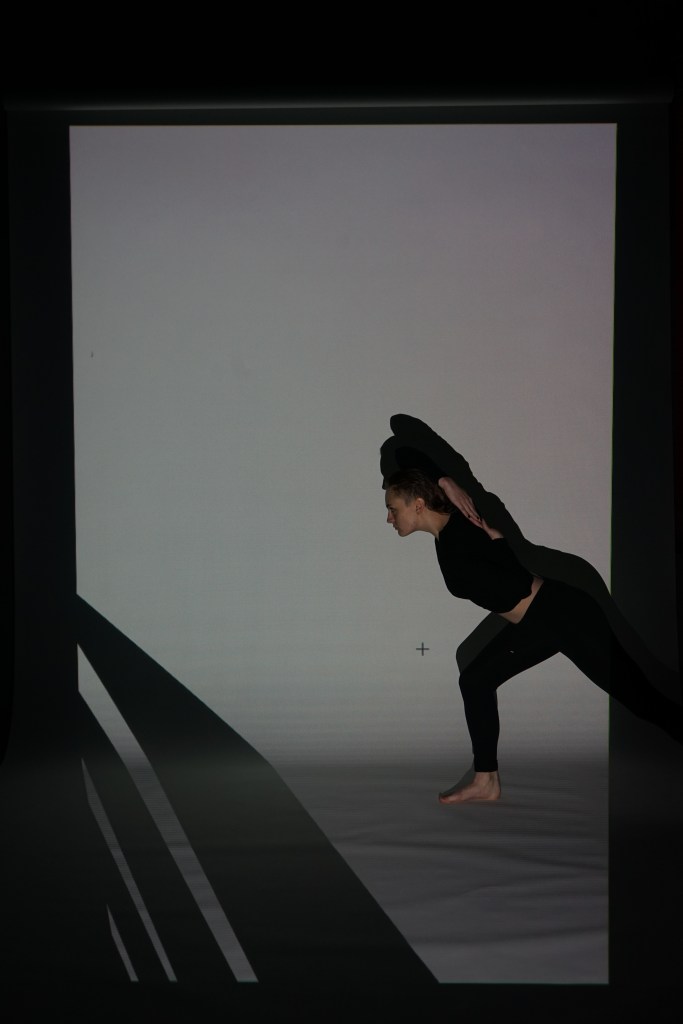
We decided to use the images from the backdrop I created but used the projection that the first image made on the model to add more impact.
Then came postproduction. Since I had a very limited experience with photo editing (I’m currently trying to professionally learn photoshop) we decided that Ellis was going to edit and retouch the Image and Liza and I were going to do all the paperwork. This is the call sheet.
Ellis did most of the editing on the image and produced a final result with which I was not fully satisfied. These are the pictures he took of the process.
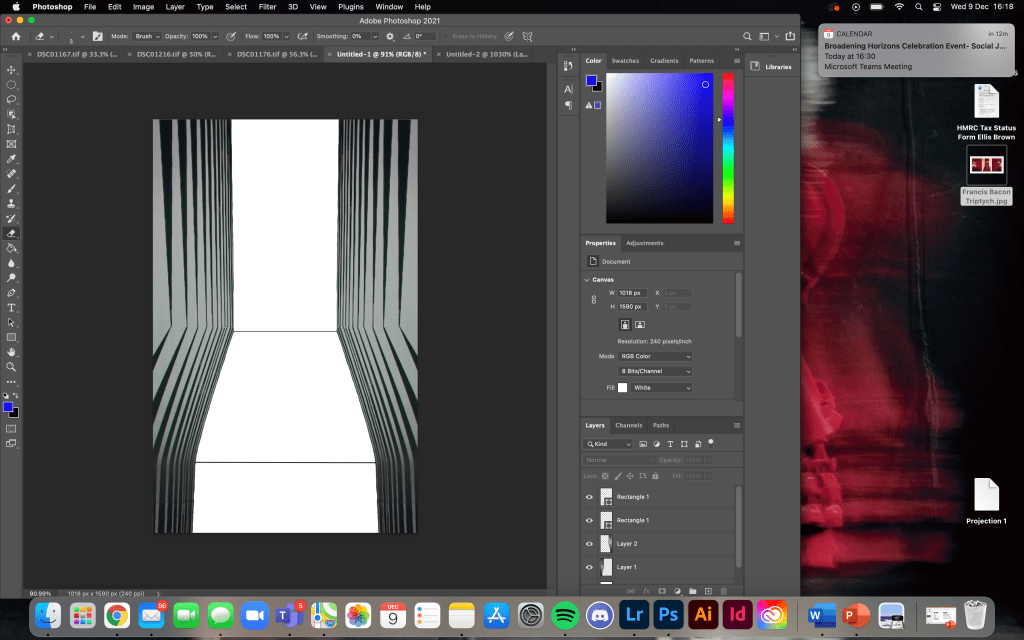
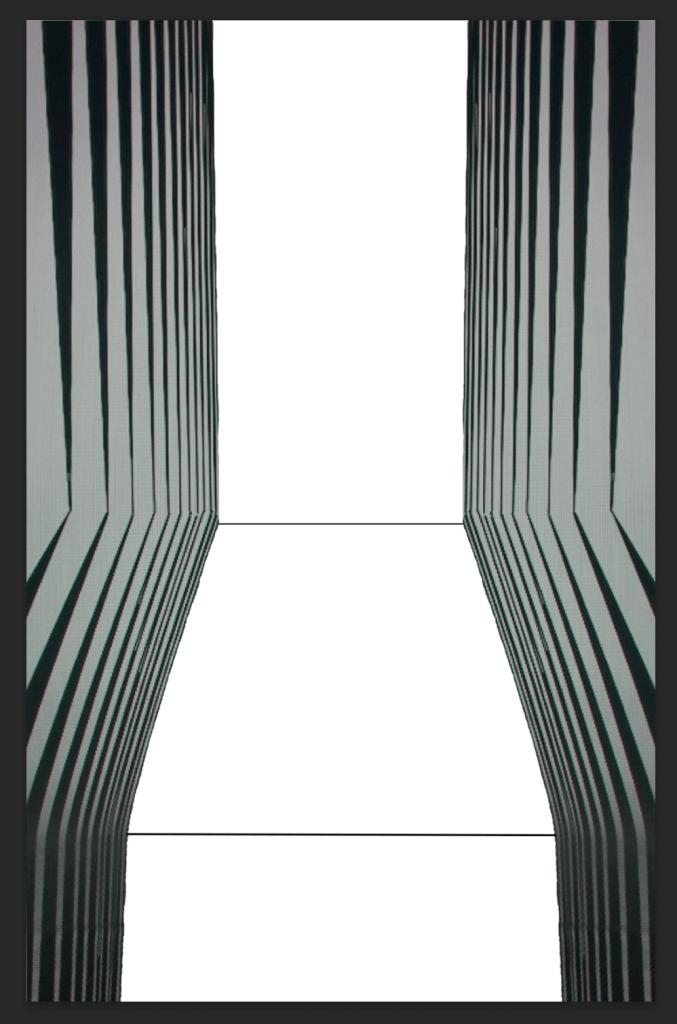
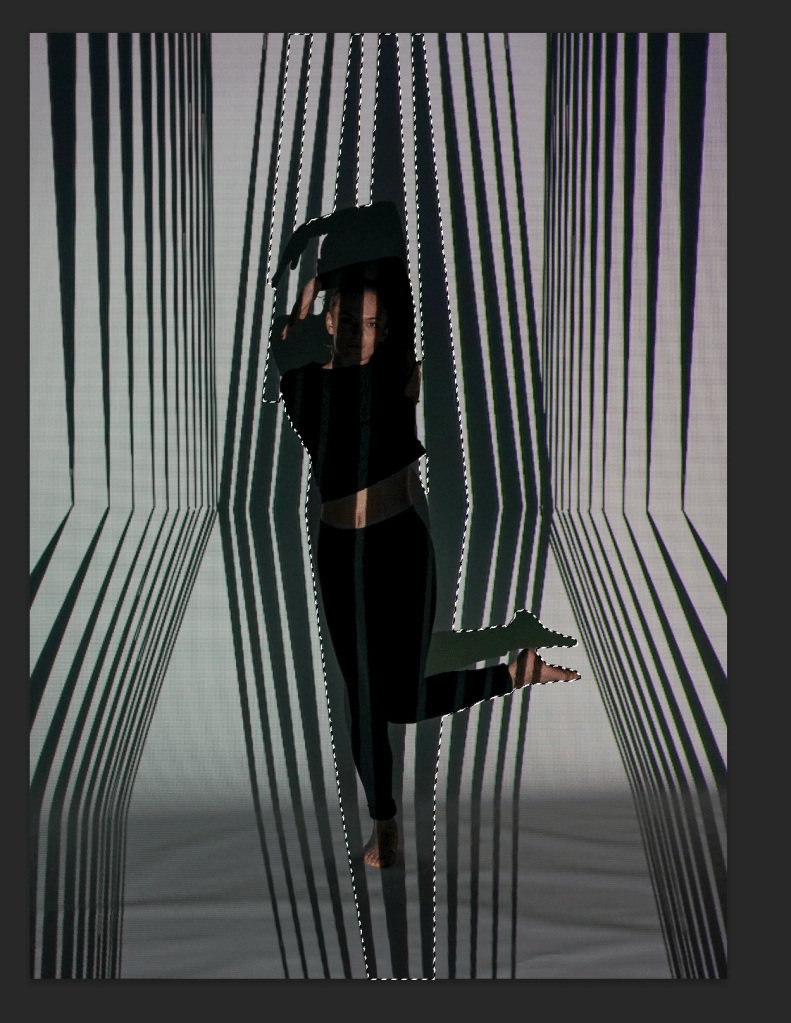
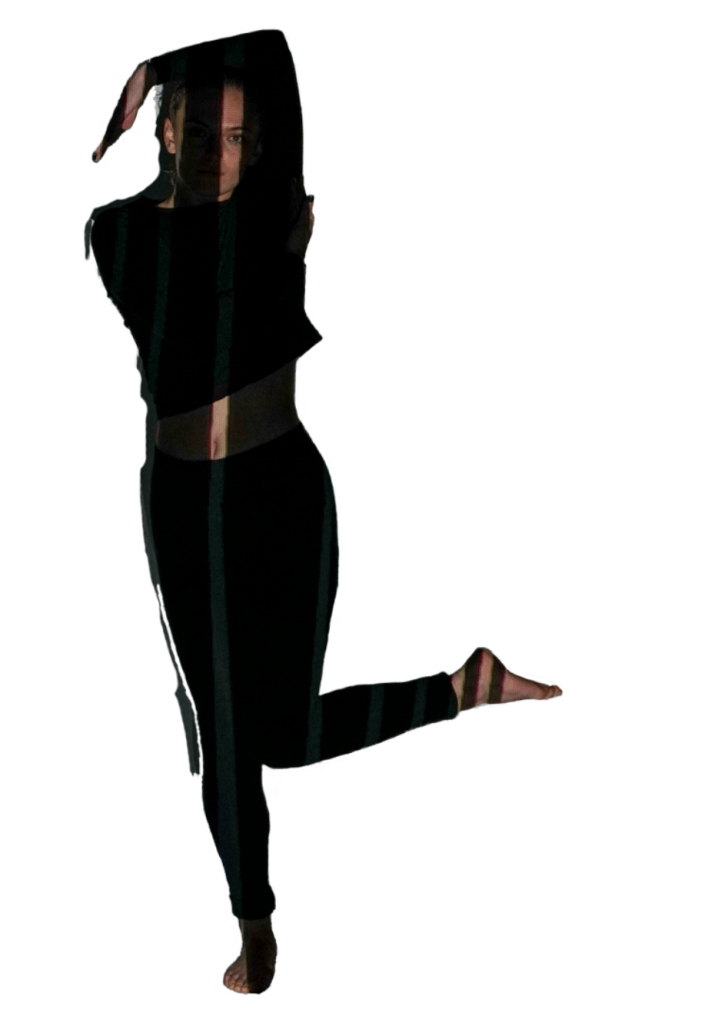
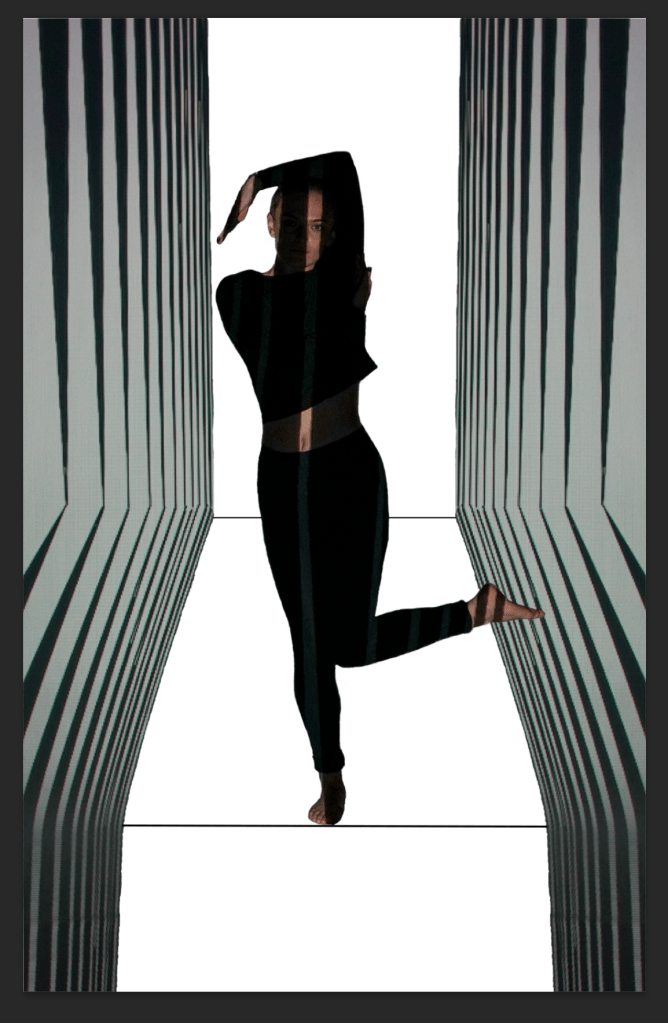
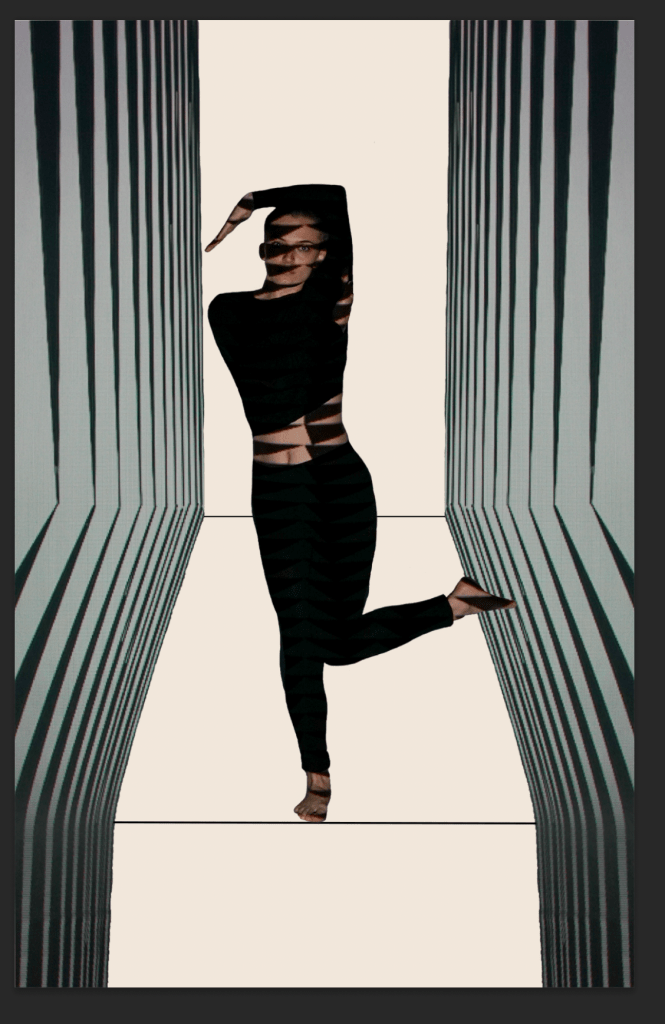
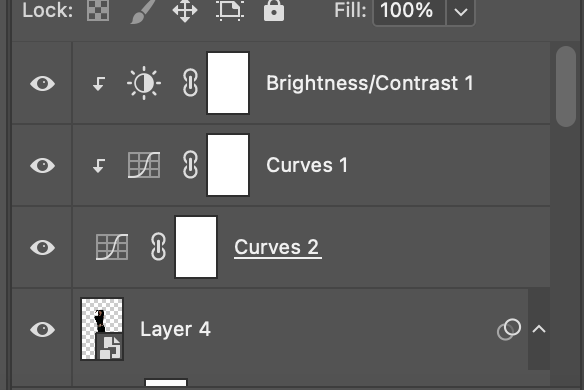
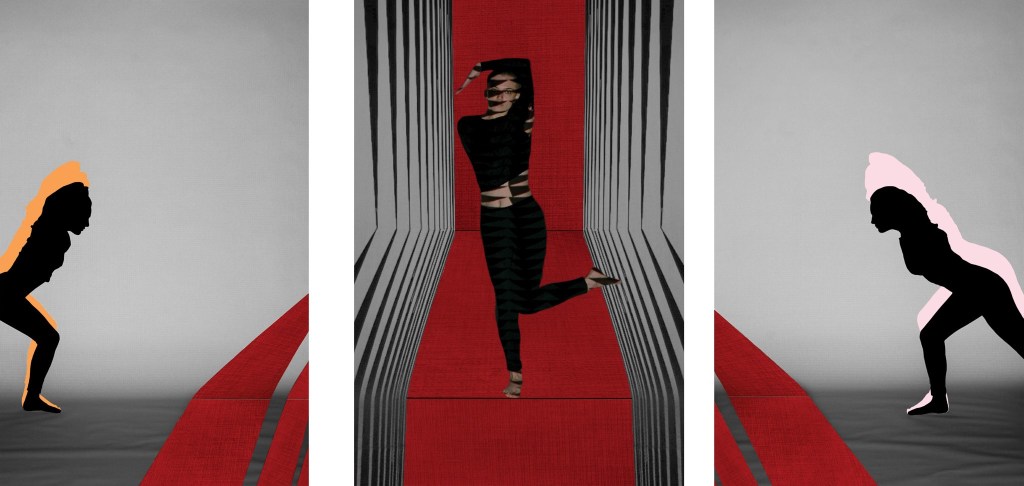
We felt that Ellis’ image had something lacking so Liza made some tweaking and made to more versions, the last of which we’ve considered as our final image
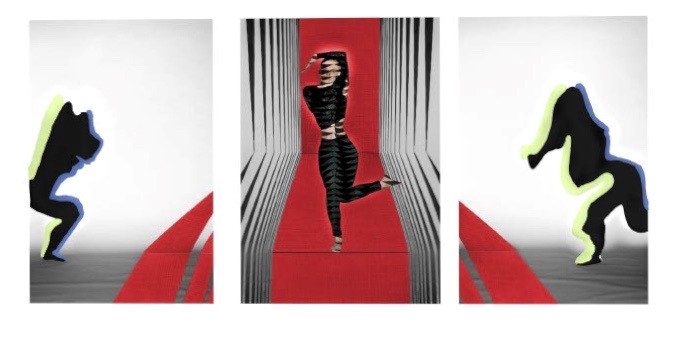
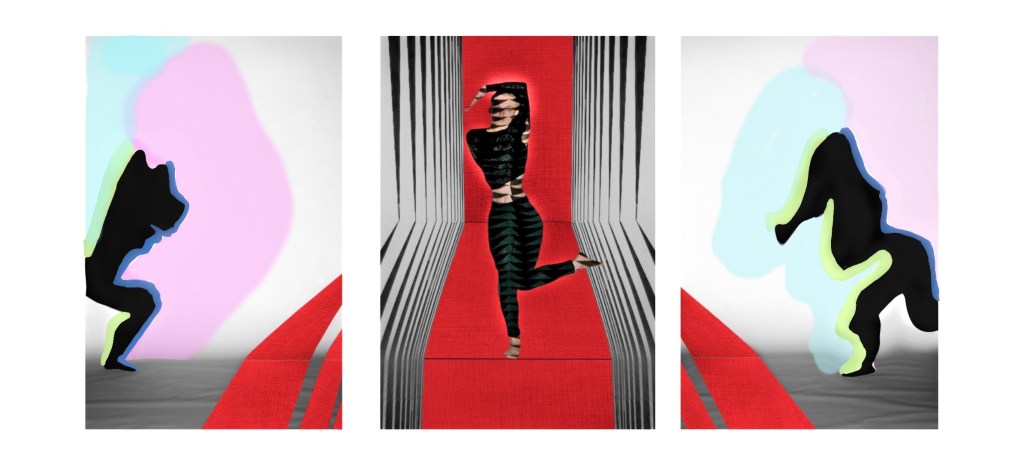
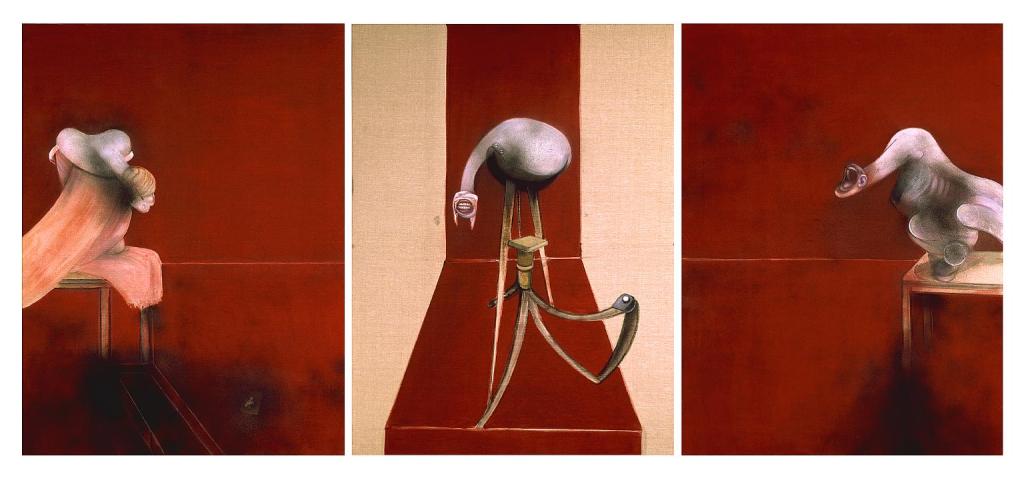
From up to down: Final version, Bacon’s Second Version of Tryptich 1944 (1988)
I am very happy with the outcome, it’s not perfect but keeping in mind that we are still first year students and we have a lot to learn I’m more than happy with the results. I believe that we have accompished what we wanted, referenced the Bacon painting enough so that it’s recognisable but not to the point where it’s a copy; and have included and mixed the influences of our chosen artists in a coherent way.
I would like in the future to be more comfortable with photo editing so that I could fixthe small flaws I see in the final image, and also add my own ideas in that respect. I am very happy about the way we have worked with one another (even though it has not been perfect), I believe we have divided the work very well, and I’m looking forward to working with them again in the future. I’m overall very satisfied with the work I’ve managed to do this first term and very excited to see what i’ll manage to do -alone and with others- in the future.
 NAMENOTFOUND//