Brief given on 22/02/22, finished in 15/03/22. This brief was given by GiffGaff, the network provider. Although not a live brief (it was last year’s), it stated to solve a problem the UK faces currently with 5G. Now, this, although seemingly simple, is a very hard brief (and boring in my opinion). I say this because 5G is usually sold as giving another layer to our current internet connection (4G), which makes it seem new and exciting. This is simply not true. 5G makes the connection significantly faster which allows for connection without friction and virtually no waiting time. This means that, broadly, more than solving a problem, it significantly improves an already existing system.
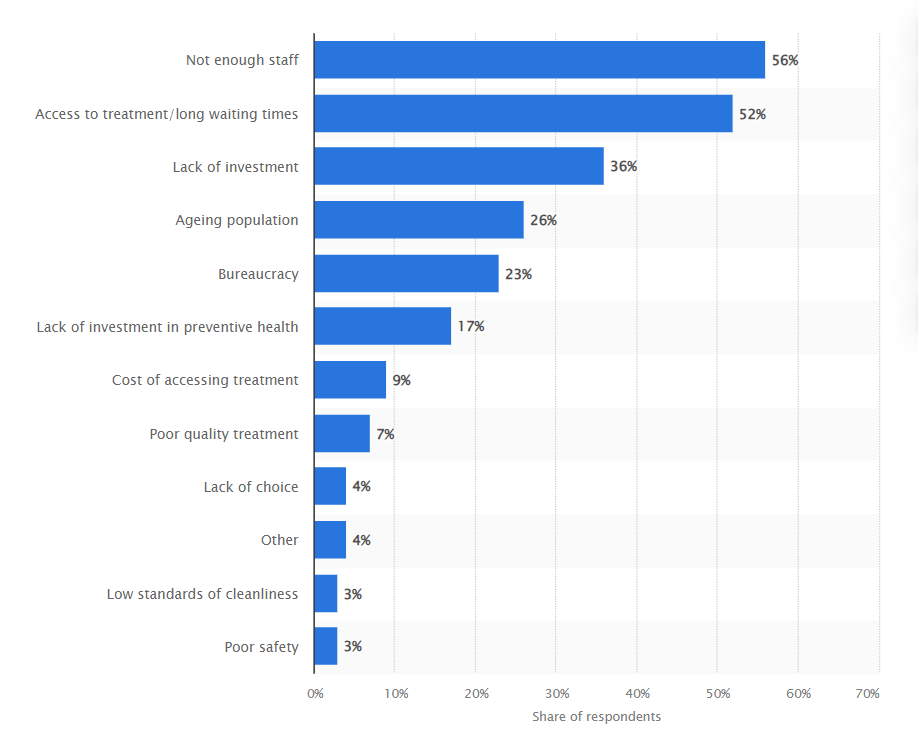
We started researching Hong Kong, since it’s one of the few countries that uses 5G extensively, and we saw that one of the main uses was healthcare. Bringing it back to the UK, the country has a surprising lack of efficiency the in its health services. This resonated with us because of personal experience. This is mainly because of understaffing, but according to https://www.statista.com/statistics/1274307/problems-with-national-health-care-system-in-great-britain/, long waiting times for appointments and general inefficacy of the system is the third biggest problem the NHS has. This is the type of issue that 5G can help with.
Taking into account the client, GiffGaff doesn’t have the resources to put 5G in every hospital and make the system run smoother. Also, intervening in the NHS might not be the wisest idea. So we decided to localize our efforts. Quickly, care homes came to mind, places with constant need of medical attention that would certainly benefit from having a more efficient system. This would make a difference.
We found The Poldhu Care Home, located in Cornwall. Almost an hour away by car from the nearest hospital (although there is a closer community hospital 15 minutes away). This care home prides itself on giving the best care to the patients and counts with a GP. Specialising on the elderly, this isn’t near enough, and being far removed from a city means that any serious urgency would be met with a slow and arduous process.

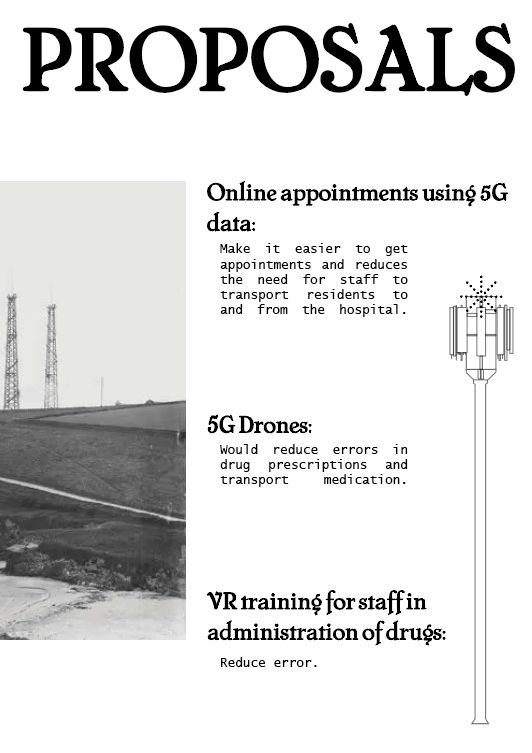
Our proposal was to install 5G in The Poldhu Care Home to:
- Arrange appointments using the internet and not by phone.
- Being able to provide telehealth with specialists on a regular basis.
- Get more accurate and informed diagnosis.
- Get better suited and more specialised treatments and perscriptions.
- Providing online training for staff on administering drugs and providing specialised treatment.
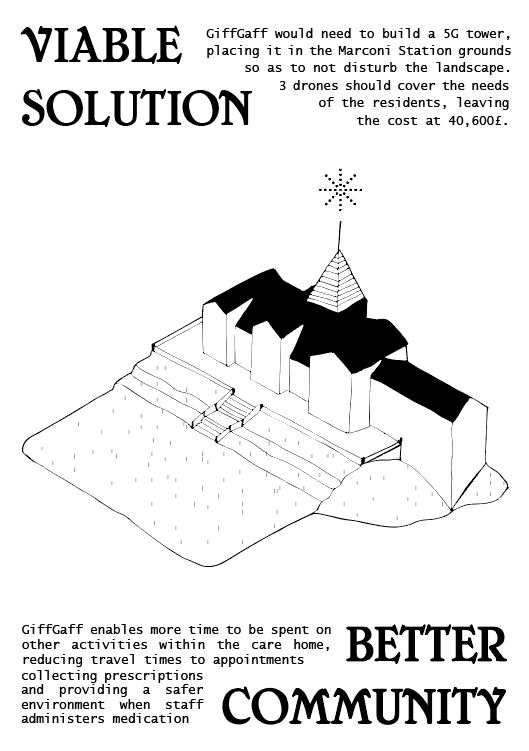
- Having a small fleet of drones (3) to provide the care home with medication and perscriptions.
The 5G tower would be located around the Marconi Transmission site, a historic location next to the care home where, in 1901, the first transatlantic wireless transmission was accomplished. This was a precursor to the radio,and this the internet. It would only be fitting to install the newest technology in such a place.
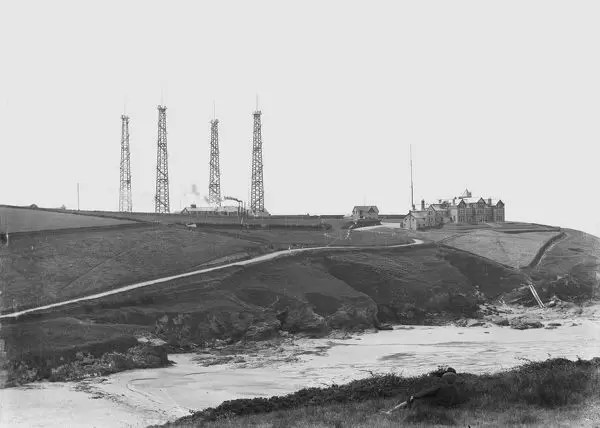
This idea had to be presented in four A3 boards. We decided to appoint me to create those boards and create a visual identity for the project. This is by all means a very boring brief that people wouldn’t be interested in, so I set myself the challenge of making beautiful something perhaps not that interesting; while at the same time conveying the message appropriately. Anya and Patrick, which did research into the healthcare system, 5G and care homes, were set with the task of writing the copy for these boards. The text had to be rewritten 2 times for it to be appropriate (once by me and then by Liza).
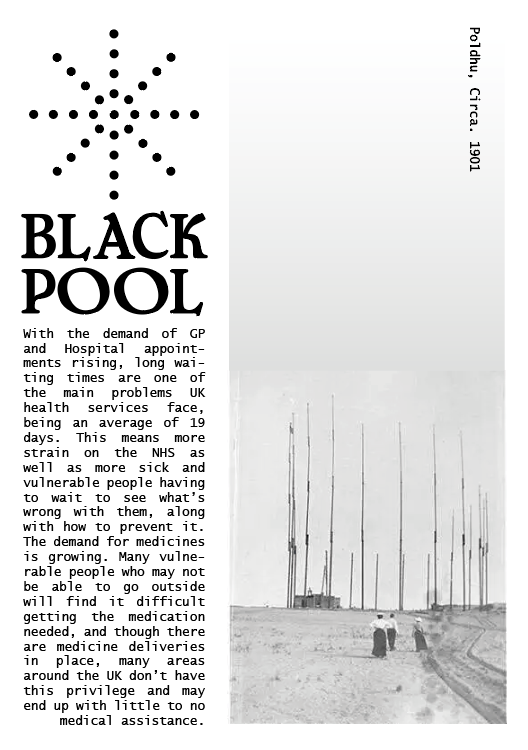
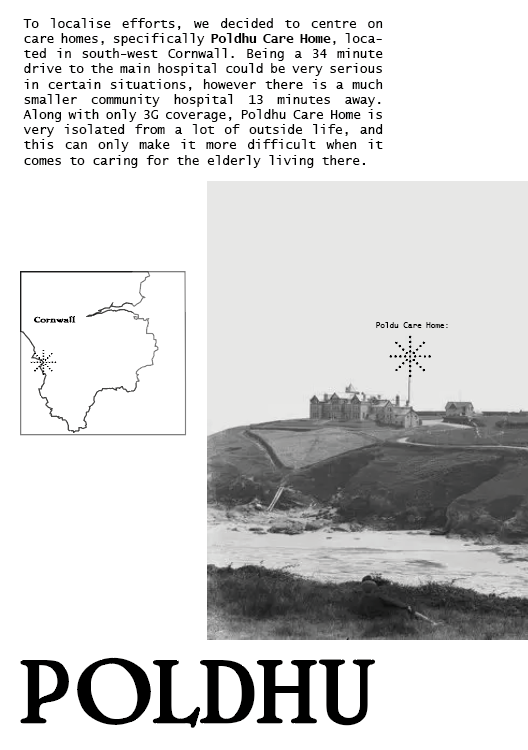
I’m very happy with the result, not only I accomplished my design challenge but we ended up having a very solid and realistic proposal for the brief. We got good feedback from the lecturers and students (although my ability to speak publicly was critiqued because I told a slightly self depricating anecdote, which is fair).
Thank you for reading.
 NAMENOTFOUND//