FOREWORD
As a preface, this project has shown me what professional direction I want to take, it has given me immense fulfilment and experience, and hopefully will be the beginning of a career. But, for various reasons I will expose, the outcome I have today falls short of what I would have wanted the submission to be. Let’s start from the beginning.
BEFORE THE BRIEF
To give some context on where I was coming from before working on this project: I had just come from finishing the culturepreneurship brief. This, as I reflected in its respective blog, left me very burnt out and unmotivated. I felt quite disillusioned with creative work and I was dreading the prospect of the major project. I had no ideas, I felt like there was nothing that particularly interested me and I just wanted to rest. Not a very good state to approach the most important project of the degree; but there I was.
A contribution to this was that, as many of my colleagues, I had the anxiety of having no idea what to do professionally. What was very clear to me, was that I wanted this major project to be something that would suppose a significant addition to my portfolio. Something that, in a practical sense, I could show to others with pride and would demonstrate mastery.
ILLUMINATION
All my negative feelings vanished when I had a talk with Xavi. He had a simple suggestion: do a video essay. This clicked in a very major way. Video essays are one of the main things I consume and enjoy in my day-to-day. At their best, they can show proficiency in a specific field, a chance to conduct research on a topic, amazing storytelling, creative drive and reflect each creator’s aesthetic flare. I don’t know why I hadn’t considered doing this before, but it worked. In a matter of minutes, I was excited and ready to tackle this amazing task.
I began by lining up all the video essayists that I admired. What I liked, what aspects I enjoyed, what general trends didn’t work for me etc. I was in the process of finding what I wanted to express and how I wanted to express it: finding my voice. I decided to lean towards a more documentary style, with a strong focus on cinematography. I knew it had to look absolutely stunning. I decided I wanted to film in situ, avoiding stock footage and only using film or archive footage to aid the storytelling.
Aesthetically, I was especially inspired by films such as ‘La Herida Luminosa’, which are filmed in 35mm. In terms of audio, it had to sound great. I play piano and I decided for the background to be mostly pieces played by me. In terms of pacing, I wanted it to be engaging, but slightly meditative.
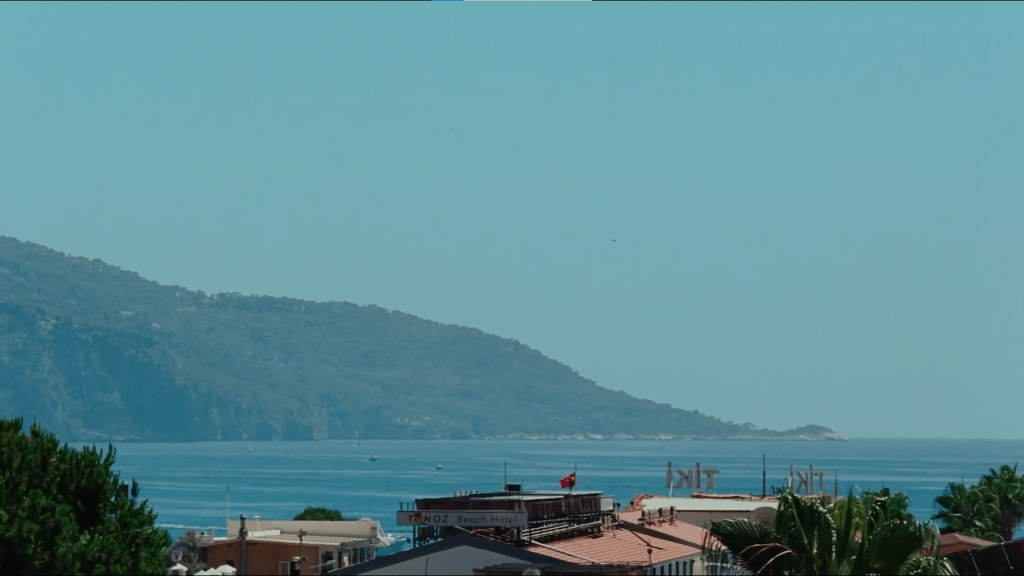
Aftersun
FINDING THE TOPIC
I didn’t know what to do my essay on. I knew that my main interest always lies in culture. Culture influences and is influenced by a myriad of things: history, sociology, geography, politics, psychology, economics, art etc. And since I’m an absolute nerd and I love learning everything, this was perfect. I’m also very interested in learning and speaking about culture surrounding my country, Spain. This was something I had very clear from the start. Now I just had to find the topic.
One day, before going to bed, I went to make some chamomile tea. I entered my kitchen and found my flatmates and their English friends watching the sitcom Benidorm. A nine-season show about various British families that meet up every year to go to an all-inclusive resort deep into Benidorm.
They visit the beach once per season, there is a single Spanish character and they spend all day surrounded by British culture, only in better weather. This left me shocked: an extremely popular English show based on a Spanish town, as if Benidorm was in some way an extension of the UK. What made it more significant to me was that my father’s family are from Elche, a city an hour’s drive south of Benidorm. I suddenly knew there was a story to be told.
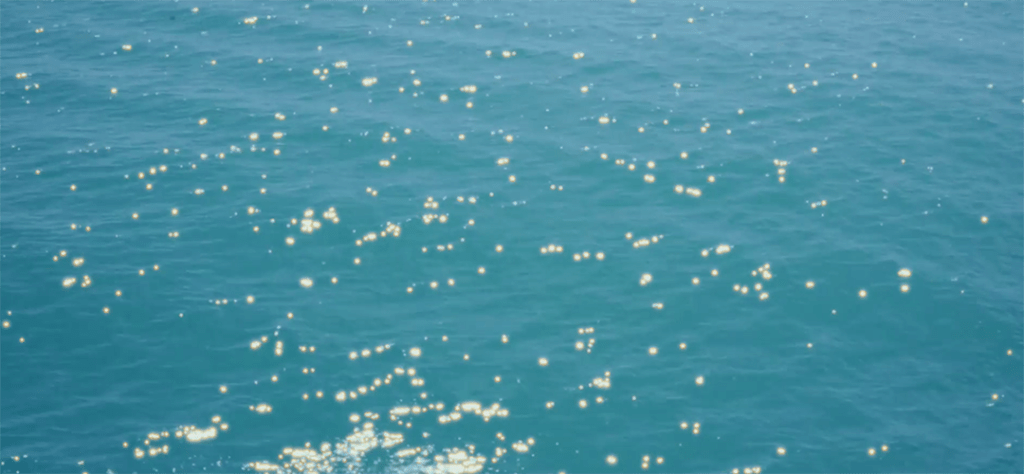
I began by watching the full series of Benidorm and any “Brits Abroad” movie I could find. Taking notes and starting to gather footage. I started talking to friends about British holiday culture: where have they gone, how they spend their time on vacation and the overarching culture behind it all.
I started my series of interviews with a friend’s mum who had consecutively gone to Benidorm for the holidays, alongside any other Spanish mass tourism destination you can think of (Magaluf, Tenerife, Torremolinos, Fuerteventura, Mallorca). The more I learnt, the clearer the story became. I was investigating this from the British side: working – middle class people wanting to get a tan and spend a relaxing/hedonistic week on our beautiful coast; and the Spanish side: the tourism industry, how we are tied to it economically and the various benefits/problems it brings.
RESEARCH
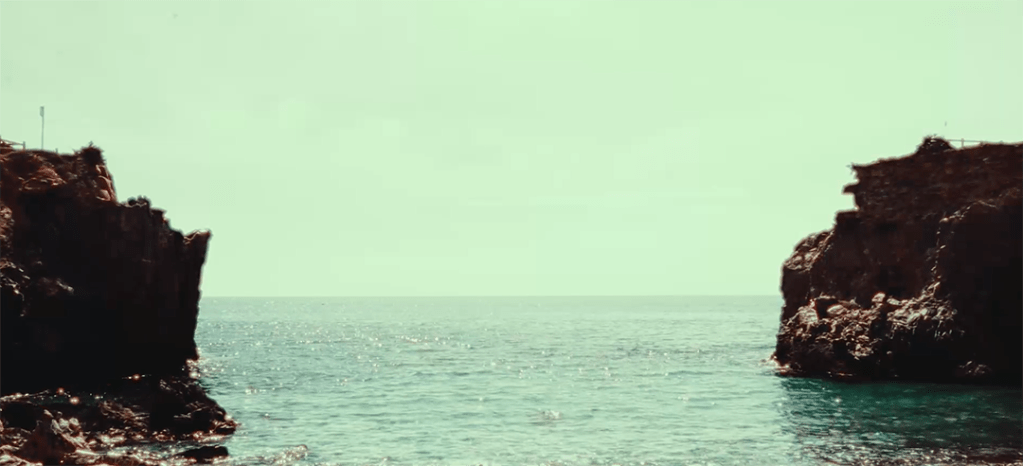
I started to properly investigate tourism and its history in Spain. The touristic boom, how it was an economic lifeline during the dictatorship and its situation today. Aside from the history of tourism as a concept, which as I came to find out is extremely new and invented by the British! I reached out to various figures in this sector. The mayor of Benidorm, writers, historians, activists and people who have experienced the phenomenon first-hand. The immense majority said yes, and I had interviews lined up after easter, mid-April. This should have been my warning that I would have a severe time constraint, but I went ahead. My next step was to travel to Spain to film, research and investigate.
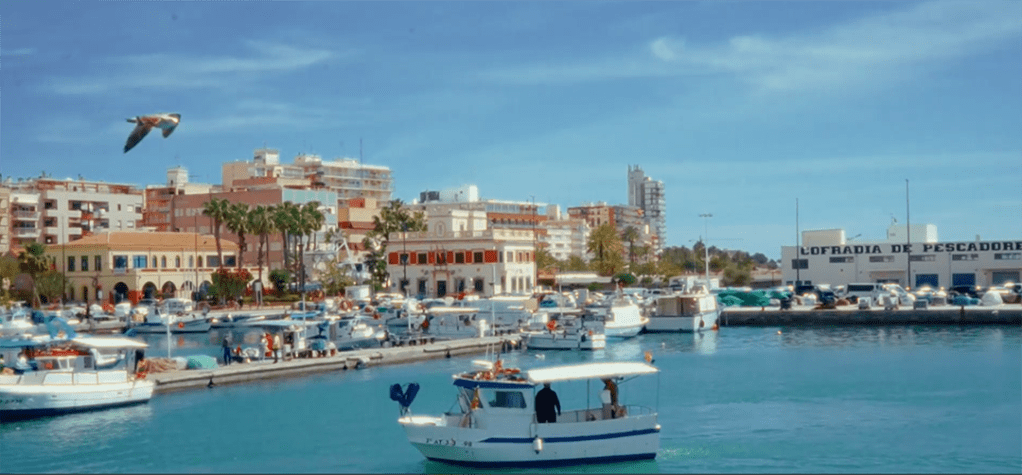
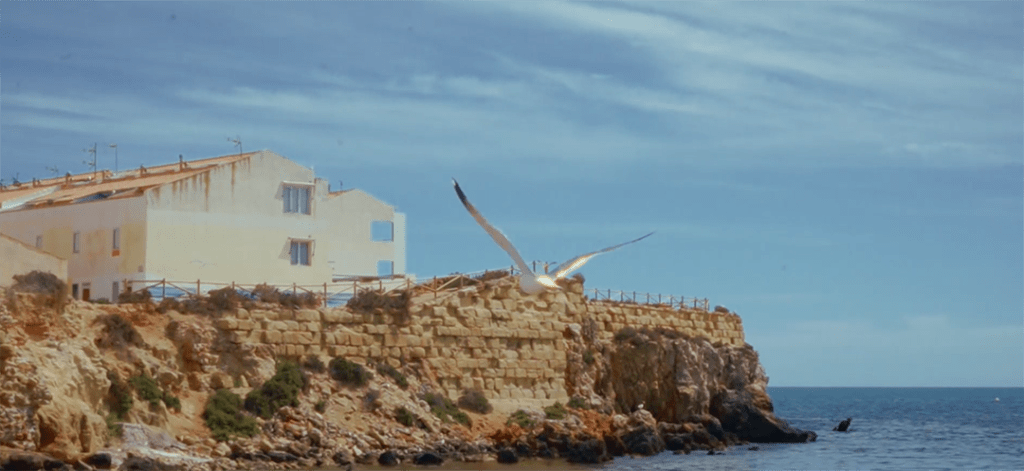
Port of Santa Pola
Before talking about this trip, I need to address research. I took this aspect very seriously. Before this project, I knew that research was something I was very interested in and I loved doing. So, for this project, I decided to professionalise. I wanted an expert in the field to look at my work and be impressed, so I aimed for the closest I could get to PhD-level research.
I took various online classes, talked with researchers asking them for advice, and managed to get researcher status in the Reina Sofía Museum Library. For this, I learnt Obsidian. It’s a markdown programme that allows you to develop a database. It’s a tool commonly used by researchers and I went for it. The learning curve was fairly steep, but I managed to develop a system that worked. This has allowed me to facilitate writing and retrieving information. As sources, I used five books, several academic papers, interviews I conducted and some Google Analytics for data.
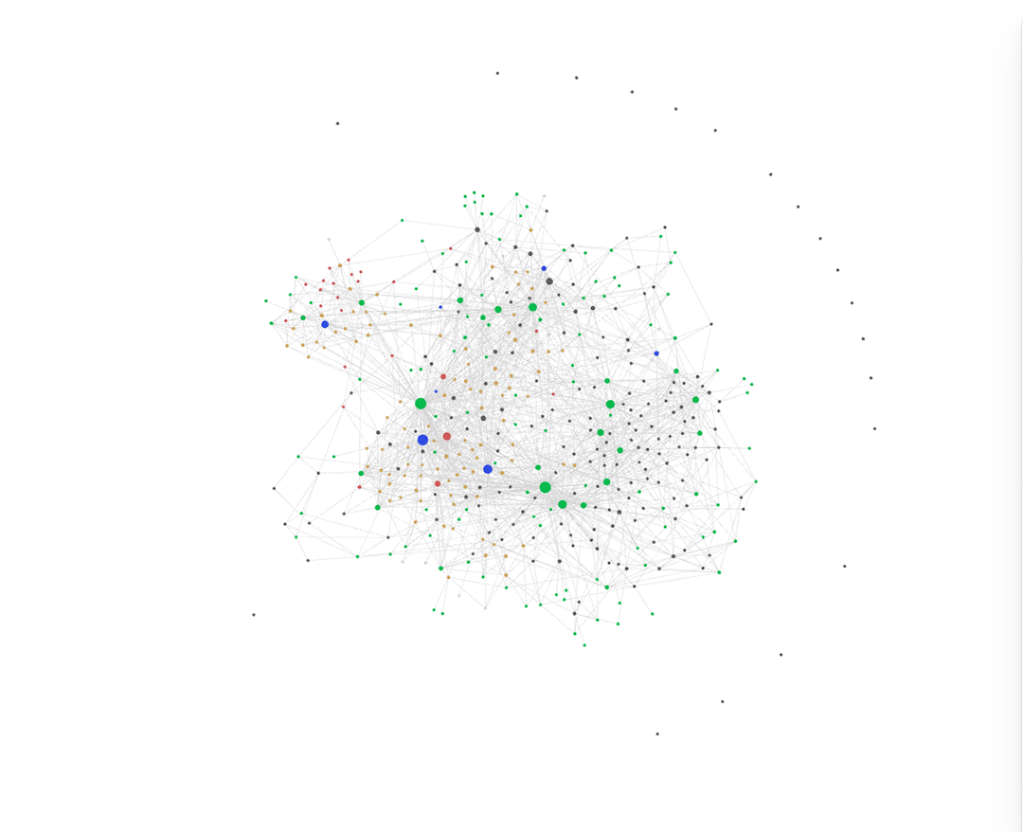
my obsidian database graph
MADRID PT.1
Back to Spain. I arrived in Madrid a little bit before easter time. Here, I went through this whole professionalising process and got everything in my obsidian database. I also went regularly to the Reina Sofía Library to access expensive textbooks and archives on the topic.
I started with an interview with Leah Pattem. She’s a Madrid-based English Journalist and Activist, owner of the popular Instagram account and blog @madridnofrills. She’s also a columnist for the newspaper El País. She’s currently investigating the case of Tribulete 7, a block of flats in the historical neighbourhood of Lavapiés which is being bought by vulture fund Elix Capital to turn into tourist flats, evicting all residents. The neighbourhood is fighting hard to stop this, as many flats in Madrid are experiencing this phenomenon. The interview was amazing, extremely pleasant and we have been in contact ever since. I also used my time in Madrid to get footage of the city, since it’s one of the cases I’m covering in the essay.
LEVANTE
During easter, culturally a very important time (especially in the Levante coast) I went to Alicante. Since part of my family is from there, we have a house in that area; where I spent two weeks working. During my time there I filmed extensively in Santa Pola, Tabarca and Alicante.
But most importantly, I discovered and researched a very particular case. In front of where my house is, lies the Clot de Galvany, a natural park that for decades was endangered of being destroyed for the purpose of building touristic flats. Its wetlands were illegally drained by a promotor, with barely any legal backlash. Nowadays, it has been restored. This is an almost unknown story that represents how the tourist industry can destroy natural environments, along with how they can be saved. During my time in Alicante, I spent two nights in Elche, recording numerous easter events, mainly to get music to add to the documentary.
BENIDORM
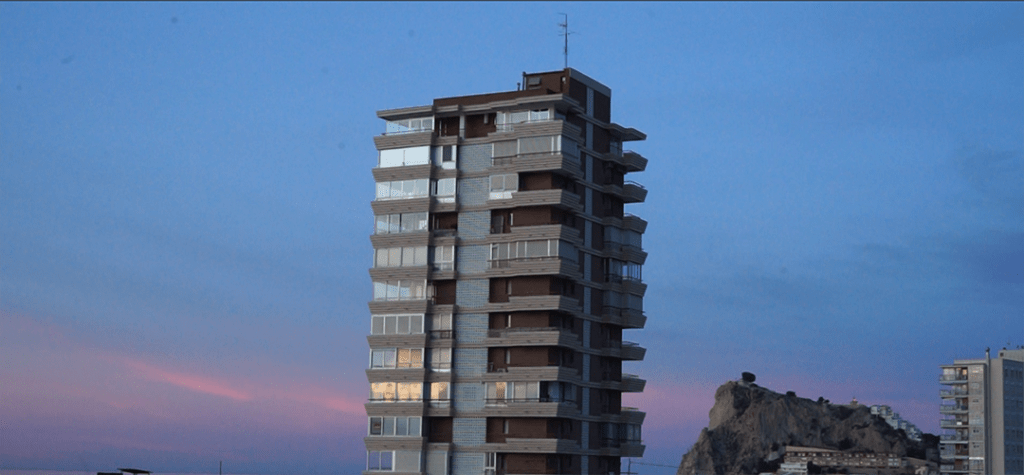
After this I spent half a week in Benidorm, residing in a friend’s house. There I spent days on end recording everything I could, talking to locals and learning about the city. The main event was interviewing the mayor, a talkative and extroverted man which gave way for a very entertaining interview. I also met his chief of communications, a prolific historian and expert in tourism. This man has given me a lot of extremely valuable information regarding almost every topic I’ve covered, which has proved extremely valuable for the project as a whole. In Benidorm, I also Interviewed a man of the same name as the mayor, Toni Pérez. A friend’s dad who has worked in Benidorm’s nightlife industry for fifteen years, who served as a good counterbalance for the mayor, being very honest (and knowledgeable) about Benidorm’s dark side.
MADRID PT.2
After this amazing two weeks, I went back to Madrid, where I interviewed Pedro Bravo. A journalist and writer who, three years ago, published a book investigating the various problems that come with mass tourism, especially nowadays. The interview, like all the previous ones, was great and it served to deepen my understanding of certain topics, as well as confirm my knowledge of them. He also offered me to work with him, since he owns a communication business, tackling cultural and social projects.
As well as Pedro, I interviewed Kaya Sotomayor, a friend from Tenerife who lived next to the Tejita, a protected beach that witnessed one of the most controversial cases of corruption regarding mass tourism. Here, an illegal hotel was built, and works on it have been ongoing, while massive protests have tried to stop it. This leads me to another topic I’ve investigated: the Canary Islands. This comes at a time when the islands are producing some of the biggest protests against mass tourism and the ravages it causes on the social fabric. These protests have expanded from the islands and are currently happening in every major Spanish city. Kaya was able to direct me to various activist organizations, and contacts she has that are involved in these protests.
During my time in Madrid, while I was filming the outside of a building facing eviction, I was approached by an elderly woman who told me her story. She has been a life-long resident in the building, a flat that is currently being bought by a Vulture Fund and she, along with her family, might be evicted this following year. She wished to remain anonymous, but it was truly amazing (and heartbreaking) seeing how real and current the topics that I’ve chosen are. One thing is to learn about it, something else is to see it with your own eyes.
LONDON
The day after Kaya’s interview I went to London. Here I spent a week writing and recording some footage. This week in London was very hard, a lot of issues arose with my living situation and it made it very hard to concentrate and spend many hours working.
ZAKAKHSTAN
After this, I went to Kazakhstan to visit my partner and finish the project. When I arrived, I finished writing and began editing, with only a week to go. During this period, I learnt to use DaVinci Resolve, along with the film emulator CinePrint16. This is a colour-grading software that I have used to emulate the aesthetics of films I have been inspired by, like ‘Aftersun’ or ‘La Herida Luminosa’. I also took into account the feedback that Xavi gave me in the formative assessment, telling me to use AI to enhance audio. This has made a massive difference. These movies were recorded on film, and I have achieved a very similar aesthetic outcome to them, which is amazing to see. I worked my hardest to add all that I could to the submission.
Sadly, I couldn’t introduce the immense majority of the content because of time constraints. To add to this, my hard drive (where most of my footage was stored) malfunctioned, which took away vital days of adding content to the submission. On this blog you will see attached a file, which is an update on the video I uploaded on the submission. It contains most of the essay, but it’s very rough around the edges. Because of the malfunction of the hard-drive, I’ve not been able do make any changes to it. It doesn’t have English subtitle, graphics, music or upgraded audio. I apologise for the lack of polish and is fully my fault.
I’m aware that I managed time badly. I had been on the move filming everything but that left me with no time to edit, and thus no time to finalise the project in time for the submission. This left me with an unfinished outcome of a project I had spent countless hours working on. Even though this leads to a worse academic outcome, this will not end here. I will keep working on this project, adding an English version (I estimate around a month) until it is fully finalised. I plan to upload this on YouTube. These two videos will constitute what I hope is the beginning of a successful career in this field, where I will definitely make more. My next step, professionally, is taking a locution course. I have a problem with mispronouncing and stuttering, as well as with pacing and tone.
CONCLUSION
This has been the thing I have enjoyed working on the most. Ever. Every aspect of this, from filming footage in-location, to the interviews, research, writing, and editing has all been incredibly fulfilling. For me, there is something about this specific format that works extremely well in my brain. It allows me to make a big and ambitious thing with many different aspects, for me, this is incredibly satisfying and rewarding. If you were to tell me that I could earn a decent living doing this full–time, I would do it. I remember, in Christmas, when I was having a mini existential crisis, thinking “How can I make a living by learning”. I think I’ve found an answer to that question.
SOURCES
BOOKS
Exceso de equipaje (Excess Baggage)– Pedro Bravo
España Fea (Ugly Spain)– Andrés Rubio
Pormishuevismo – Erik Harley
La España de Las Piscinas (Swimming pool Spain) – Jorge Dioni López
Historia del Turismo en España en el siglo xx (History of XXth Century Tourism in Spain) – Ana Moreno Garrido
PAPERS
El Caso de las Islas Canarias y el Derecho a la Libre Determinación de los Pueblos (The Case of the Canary Islands and the People’s Right of Free Determination) – University of Murcia
El Turismo de Masas en Canarias (Mass Tourism in the Canary Islands) – Eduardo Cáceres Morales, University of Las Palmas de Gran Canaria.
EL Clot de Galvany (Elche): Un Ejemplo de Humedal Amenazado por la Expansión Turístico-Residencial (The Clot de Galvany (Elche): An Example of Wetlands Endangered by Touristic Residential Expansion) – Salvador Palazón Ferrando and José Antonio Larrosa Rocamora. University of Alicante
INTERVIEWS
Pedro Bravo – Writer and Journalist
Toni Pérez – Mayor of Benidorm and the Delegation of Tourism
Leah Pattem – Jornalist and Activist.
Tracey Reardon – Benidorm Enjoyer.
Kaya Sotomayor – Tenerife Resident.
Antonio Pérez Parra – Public Relations and Cook
FILMS
La Herida Luminosa (Daydreaming So Vividly abut our Spanish Holidays) – Christian Avilés
Los Huevos de Oro (Golden Balls) – Bigas Luna
Benidorm 2017 – Claudia Costafreda
Aftersun – Charlotte Wells
How to Have Sex – Molly Manning Walker
The Inbetweeners – Ben Palmer
El Hombre que Embotelló el Sol (The Man that Bottled the Sun) – Óscar Bernàcer
Bikini – Óscar Bernàcer
Beach Bum – Harmony Korine
Morvern Callar – Lynne Ramsay
Sexy Beast – Jonathan Glazer
Matar Cangrejos (Killing Crabs)– Omar A. Razzak
COLLABORATORS
Juan Díaz
Liza Zakharova
Benidorm Town Hall
Paige Reardon
Kaya Sotomayor
Javier Pérez Labrador
Raúl Martín Cacho
Yago Martín Arroyo
Leah Pattem
Elliot Dennison
Kingston University
Library of the Reina Sofía Museum
Erik Harley
Anonymous neighbour of the Calle de los Mancebos Nº2
MUSIC
Easter music by:
Cofradía del Cristo del Camino y María Madre de las Delicias
Fervorosa Hermandad de Nazarenos de la Flagelación y Gloria
Cofradía del Santísimo Cristo de la Misericordia
Coro Plural Benidorm
Piano Music
Bach – Busoni Chaconne in C minor
Manuel de Falla – Serenata Andaluza
Bach Praeludium II
Takashi Yoshimatsu – Piano Folio… To a Disappeared Plaeiad.
Sibelius Op.76 No.3 ‘Carillon’.
 NAMENOTFOUND//